
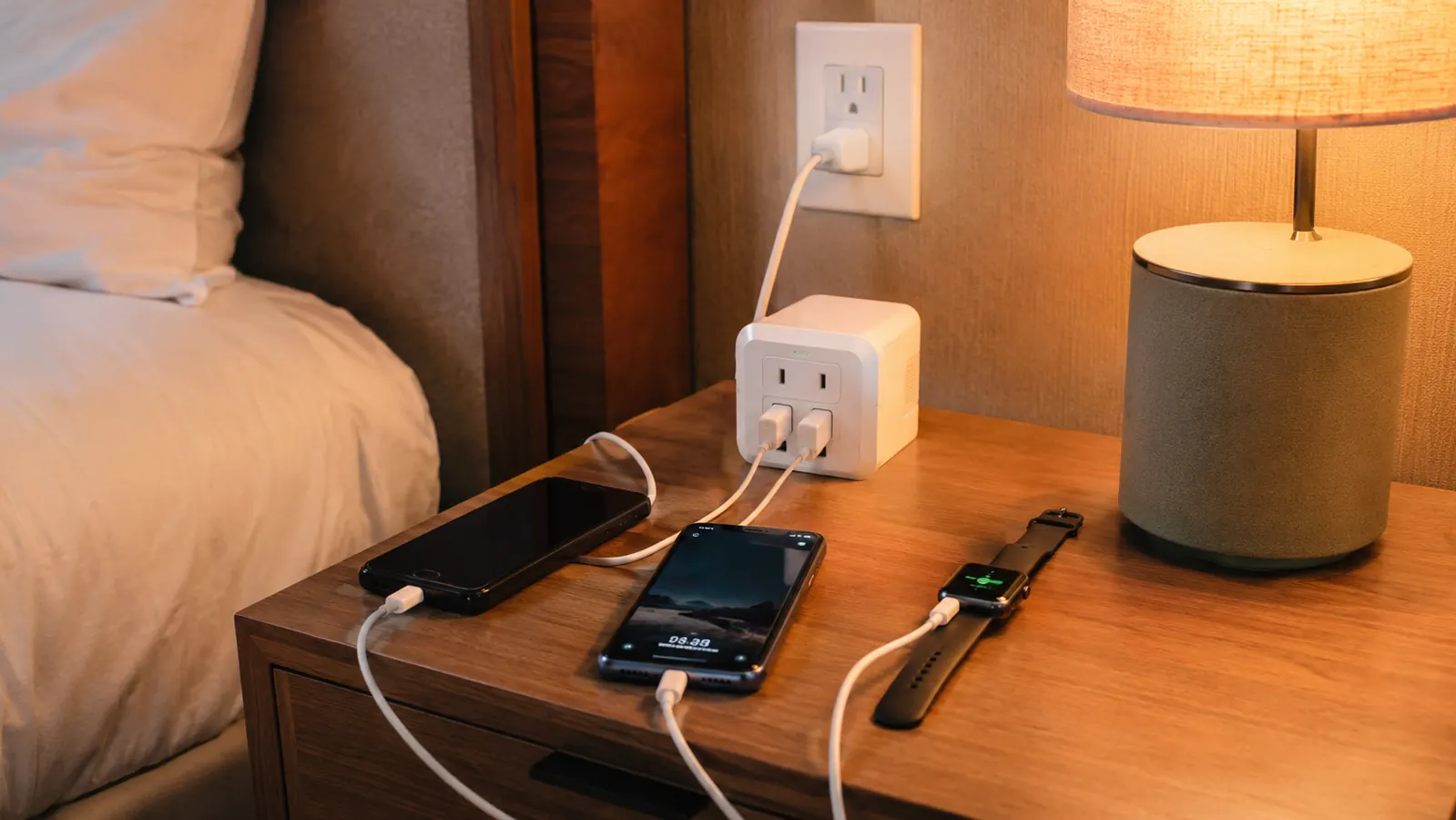
I've lost count of how many hotel rooms Rennie and I have slept in over the years, between long stretches on the road in our 2018 4Runner and the flights we take a few times a year for the trips that are too far to drive. What almost every one of those rooms has in common is a genuine shortage of outlets. There's usually one behind a lamp, one behind a heavy dresser that isn't moving for anybody, and if you're lucky, one more hiding under the desk with a dead USB port built into it. Meanwhile I'm carrying a phone, Rennie's phone, a laptop, a camera battery, and sometimes a tablet, all of which need to be full by morning.
The fix that ended this fight for us is a small QINLIANF power strip, five outlets and four USB ports, that lives in the side pocket of my carry-on year round. It's not glamorous gear. It's just the one item that quietly solves a problem nearly every hotel room and rental has. Here are the ten reasons it's stayed in the bag.
One Outlet Is Never Enough on Travel Night
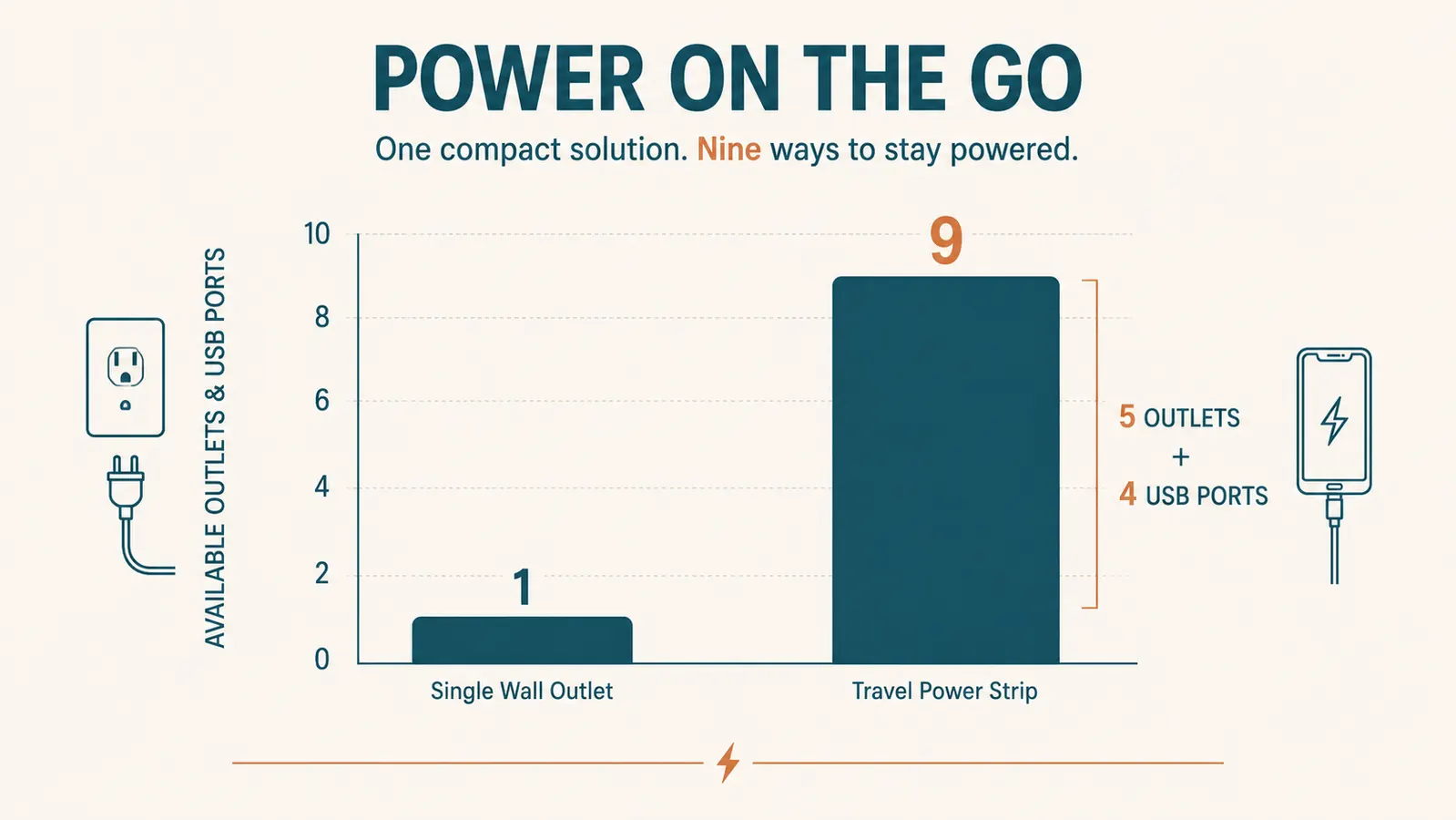
If you've ever unplugged the lamp to charge your phone, or waited your turn for the one working outlet in the room, this is the fix. Five outlets and four USB ports from a single wall socket.
Amazon Check Today's Price on Amazon →It turns one outlet into nine charging spots
Five AC outlets plus four USB ports means Rennie and I can have our phones, my laptop, her tablet, and a camera battery all charging at the same time, off the single working outlet the room actually has. On a night where we're both up early for a flight, that matters more than it sounds like it should. Nobody is waiting for the other person's phone to hit 80 percent before they get a turn.
It reaches outlets that are actually usable
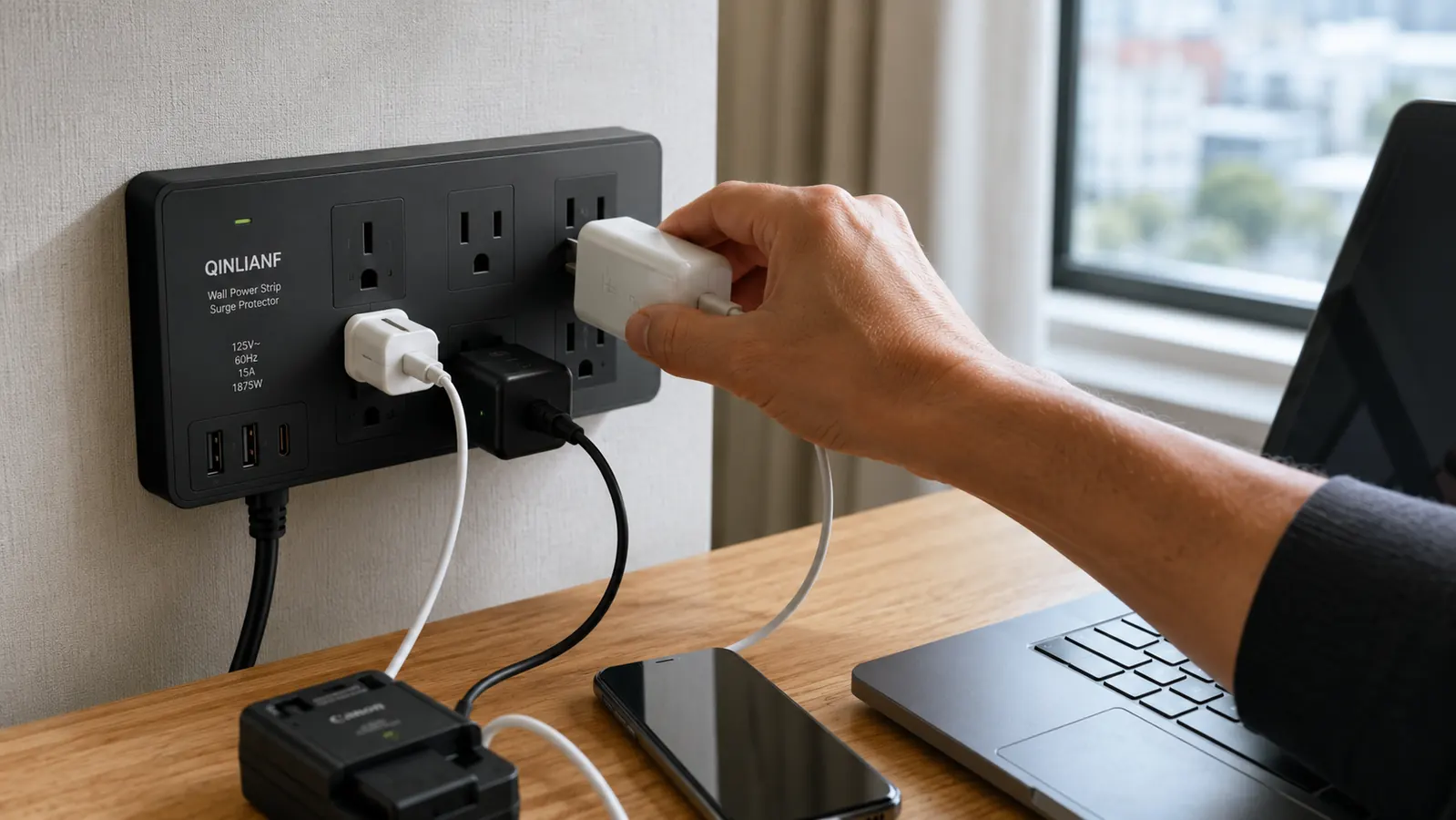
Hotel outlets are frequently wedged behind a headboard, under a heavy dresser, or down at floor level behind a nightstand nobody wants to move. The strip's cord gives you enough reach to plug in wherever the outlet actually is, then bring the power up onto the nightstand or desk where you can see what's charging. I stopped unplugging the room's one lamp to free up an outlet the day I started packing this.
The USB ports mean fewer bricks in your bag
Four built-in USB ports mean I leave the wall bricks for my phone and Rennie's phone at home entirely, just a cable straight into the strip. That's two fewer chunky adapters rattling around in the cord bag, which sounds small until you've packed for a two-week trip and every ounce of dead weight starts to bug you. The USB ports charge at a normal phone-charging speed, not fast-charge speed, which is the one tradeoff worth knowing about going in.
It has real surge protection, not just extra outlets
This isn't just a splitter, it's rated for 1680 joules of surge protection, which matters more than people think in older hotels and rental properties with wiring that's seen better decades. I've plugged into rooms where the lamp flickered when the AC kicked on. A cheap unprotected splitter passes that spike straight to whatever's plugged in. This one is built to absorb it instead.
The flat, 3-sided layout keeps bulky plugs from blocking each other
A lot of power strips waste half their outlets because two bulky wall chargers side by side block each other out. This one spaces its outlets across three sides of the housing, so a bulky laptop brick on one side doesn't cover up the outlet next to it. I can genuinely use all five outlets at once with a mix of laptop chargers, a curling iron adapter, and small bricks, which is not something I could say about the strip we used before this one.
It's light enough that you actually pack it every time
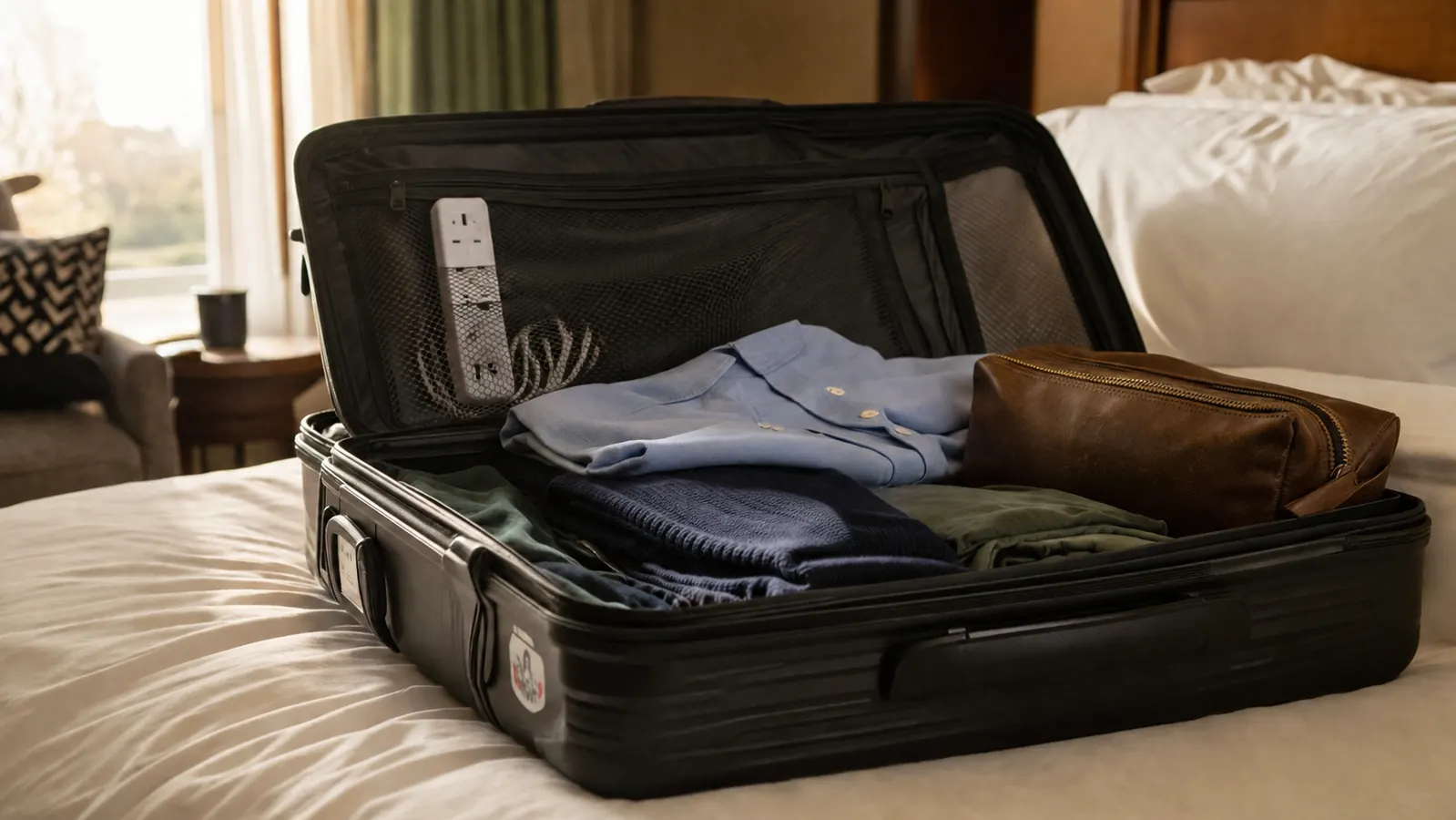
The best travel gear is the gear you don't talk yourself out of packing. The QINLIANF weighs next to nothing and folds flat enough to slide into a side pocket of a carry-on without stealing space from anything else. I've tried carrying bulkier surge-protected strips in the past and they were the first thing I left behind when the bag got tight. This one never gets left behind, because there's no real cost to bringing it.
It works just as well at home as it does on the road
This isn't a single-purpose travel gadget that sits in a drawer between trips. It's the same strip I use at my own desk when I'm not traveling, which is honestly the reason it made it into my bag in the first place. Dual-use gear earns its keep. If you want the longer version of how it's held up after months of that kind of daily use, our <a href="/qinlianf-power-strip-review-long-term">full long-term review</a> covers the details.
It solves the shared-outlet fight when you're traveling with someone else
Traveling as a couple, or with a friend, means two people's devices competing for the same handful of outlets every night. This strip ends that negotiation entirely. Rennie plugs in her phone and reading tablet on one side, I take the laptop and camera gear on the other, and neither of us is unplugging the other's charger at 11 p.m. to steal an outlet.
It keeps every device charged by the time you actually need it
The real value shows up at 6 a.m. on a flight day, when everything from your phone to your camera needs to be full and there's no time to wait in line for the one working outlet in the room. Plugging in the strip the night before, everything charges in parallel overnight instead of in sequence. We've worked out the exact order we plug things in when the room only has the one outlet in our <a href="/how-to-charge-multiple-devices-in-hotel-room">guide to charging multiple devices in a hotel room</a>, if you want the specifics.
It's cheap enough that losing one doesn't sting
Hotel rooms swallow small items, and a power strip left plugged in behind a nightstand is an easy thing to forget on checkout morning. This one is inexpensive enough at today's price that if it happens, and it has happened to us once, replacing it isn't a real setback. That's part of why it's worth owning in the first place, it's not precious gear you have to babysit.
Amazon Get the strip that's cheap enough to not worry about →
What I'd Skip
This is a US-voltage power strip, not a voltage converter, and that distinction matters if you're flying internationally. Plugging a 110-volt strip like this into a 220-volt outlet abroad, even through a plug adapter, can destroy the strip and anything plugged into it. Most modern laptop and phone chargers are dual voltage and marked 100-240V on the fine print, so they only need a plug shape adapter, but things like hair dryers and curling irons usually are not dual voltage and should not go anywhere near this strip overseas. Domestically, keep your total plugged-in draw within its rated limit, don't run a space heater and a hair dryer off it at the same time. And a few hotels and most cruise lines specifically prohibit multi-outlet strips and surge protectors in guest rooms, so it's worth a quick check of the property's policy before you assume you can use it. None of this is electrical or professional advice, just what I've learned from packing this thing on a lot of trips.
A hotel room only ever gives you one good outlet. Everything after that is on you to solve.
Never Fight Over an Outlet Again
Nine charging spots from one wall socket, surge protection built in, and light enough that it never gets left out of the bag. Check today's price before your next trip.
Amazon Check Today's Price on Amazon →