
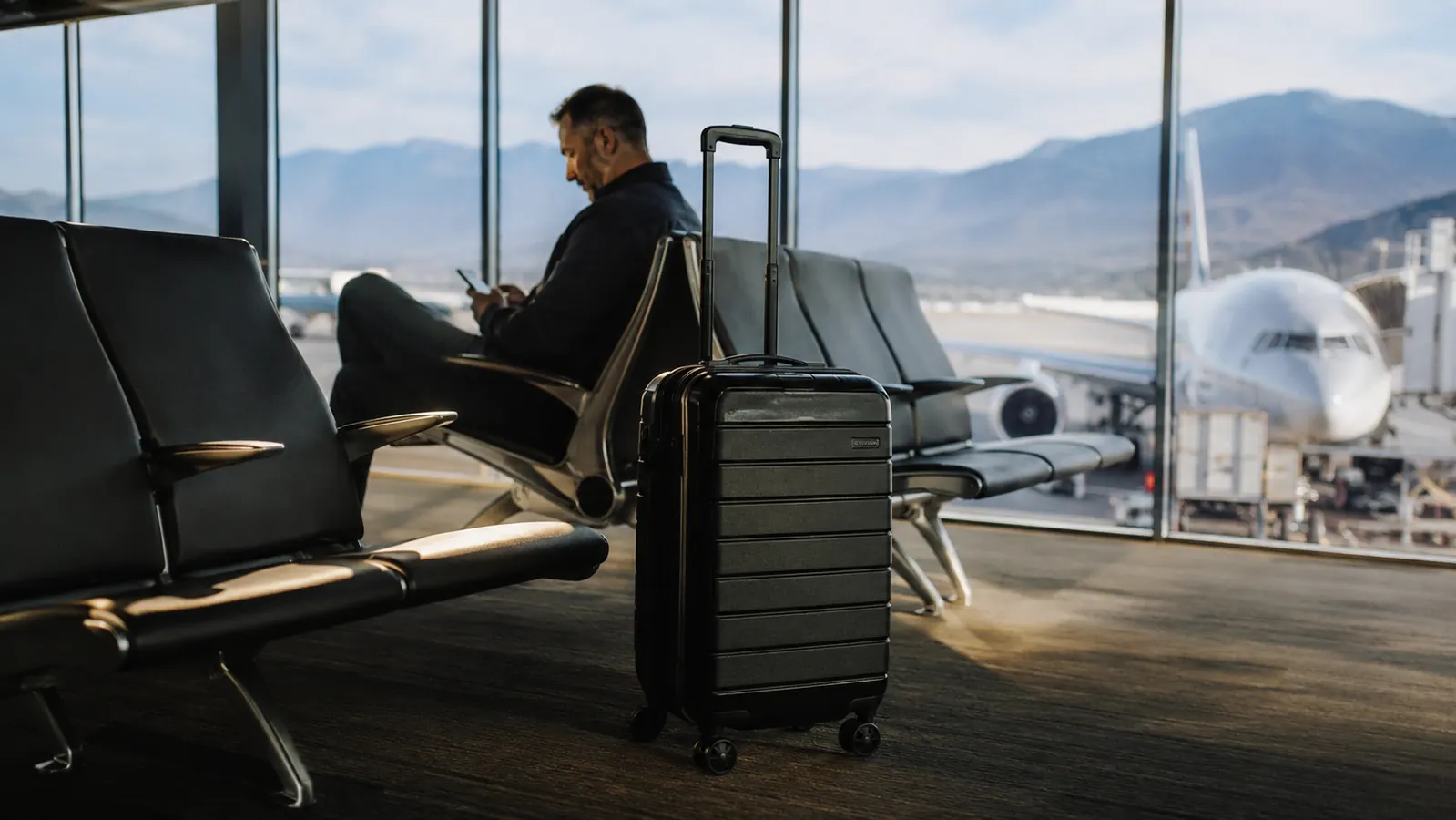
I bought the Amazon Basics 21-inch hardside carry-on a little over a year ago, after my last suitcase lost a wheel in the jet bridge in Denver and I had to drag it sideways down the concourse like a stubborn dog on a leash. I fly out of Boise more often than most people I know, usually three or four domestic trips a quarter, plus whatever my wife Rennie and I book for ourselves, and I was done gambling on bags that looked fine in a photo and fell apart by the second trip. I wanted something I could throw in an overhead bin, gate-check without flinching, and stop thinking about. A year and something close to 30 flights later, I have a real answer on whether this one earned that trust.
This is not a review written after unboxing it and rolling it around the living room. I have hauled this bag through connections in Denver, Chicago, and Phoenix, checked it at the gate on three regional jets too small for its size, and packed it full for everything from a two-night work trip to a nine-day stretch where it was doing double duty as an overflow bag for a longer road trip in the 4Runner. What follows is what happened to the wheels, the zippers, and the shell over that stretch, not what the listing photos suggest.
The Quick Verdict
A genuinely solid hardside carry-on for the money, though the spinner wheels have picked up a rattle and the telescoping handle needs a firmer hand than it did on day one.
Amazon Check Today's Price →Tired of Suitcases That Fall Apart Before Your Second Trip?
This carry-on has been through roughly 30 flights and one long road trip without a cracked shell or a broken zipper, which is more than I can say for the last two bags I owned.
Amazon Check Today's Price on Amazon →How I've Used It Over the Past Year
The Amazon Basics has flown with me on close to 30 domestic segments since last spring, mostly out of Boise with connections through Denver, Salt Lake, and Phoenix. On about a third of those flights, the aircraft was small enough that gate agents pulled bags for valet checking right at the jet bridge door, which meant this suitcase got tossed onto a cart, wedged next to a dozen others, and handed back to me at the bottom of the stairs more times than I can count. I stopped babying it after the first few trips because there was no way to avoid that treatment on regional routes.
It has also done one stint outside its usual job. Rennie and I took a nine-day trip last fall that started with a flight into Salt Lake and then continued by road in the 4Runner up through a loop of state parks, and I used this carry-on as the overflow bag for that trip, riding in the back seat rather than the cargo area since it does not strap down as cleanly as our soft duffel bags do. It picked up its first real scuffs on that trip, mostly from sliding around on gravel roads when I set it down to dig for something.
Most of the time, though, this bag lives the ordinary carry-on life: overhead bin on the way out, hotel closet for two or three nights, overhead bin again on the way home. I have not checked it as cargo luggage a single time in a year, which was the whole point of buying a carry-on-sized bag in the first place.
Spinner Wheel Wear After a Year of Real Use
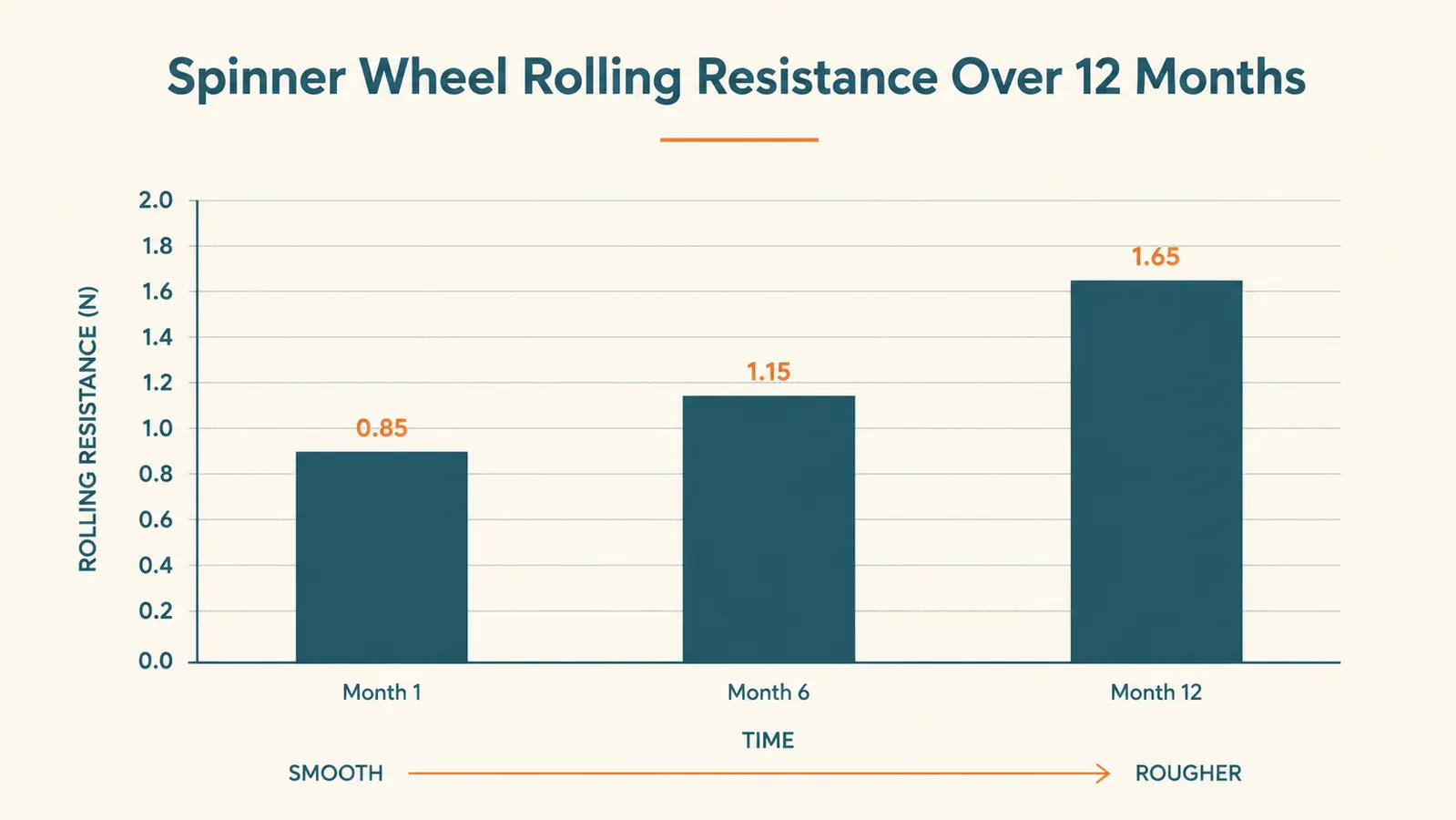
The four spinner wheels rolled smoothly and quietly for the first several months, gliding across airport tile and carpet without any pull to one side. Somewhere around month six, I noticed one of the rear wheels had started to develop a faint click when I pushed the bag forward on a hard floor, the kind of sound you only catch in a quiet terminal at 5 a.m. It has not gotten worse since, and the wheel still spins freely and rolls straight, but it is no longer silent the way it was new.
By the twelve-month mark, all four wheels show visible flat spots where they meet the axle housing, and rolling resistance has crept up noticeably on rough surfaces like the gravel parking area near my long-term parking lot at the airport. On smooth terminal floors the difference is small. On uneven pavement or gravel, I can feel the bag drag slightly more than it did new, and I have to push a little harder to keep it moving in a straight line. None of the wheels have cracked, seized, or come loose, which is more than I can say for the bag I replaced, but I would not call them as good as new.
The telescoping handle has held up better than the wheels overall, though it now takes a firmer tug to fully extend on the first pull of the day, something it never needed when the bag was new. It has never failed to lock into place, and it retracts flush every time, but I have started giving it a second push out of habit rather than trusting the first one.
Zippers and Shell Durability
The zippers are the part of this bag I worried about most going in, since zipper failure is the single most common way a carry-on dies before its shell ever gives out. A year in, both main zipper pulls still run smoothly around every corner of the case, including the tight curve at each corner where cheaper zippers tend to bind or snag fabric. I have not had a single jam, and I have packed this bag tight enough on more than one trip that I had to sit on it to get the zipper closed.
The scratch-resistant hard shell has taken the abuse I expected it to and mostly shrugged it off. There are light surface scuffs across both sides, more visible on the top half where valet-check handlers tend to grip the bag, and one corner picked up a dime-sized scrape from being set down on gravel during the road trip. There are no cracks anywhere in the shell, no stress marks radiating from the corners, and no separation where the shell meets the frame, even after roughly 30 flights of being tossed onto luggage carts. For a hard-shell bag in this price range, that is a better result than I expected walking in.
The expansion zipper, which lets the case open up for roughly 25 percent more packing space, still expands and compresses cleanly, and I have used it on close to half of my trips depending on how much I am bringing home. The one weak point I have found is the small plastic pull-tab on the main zipper, which has started to feel slightly loose at the base, the same failure point that eventually did in my last two suitcases. It has not broken yet, but I check it before every trip now.
Packed Capacity and What It Actually Holds
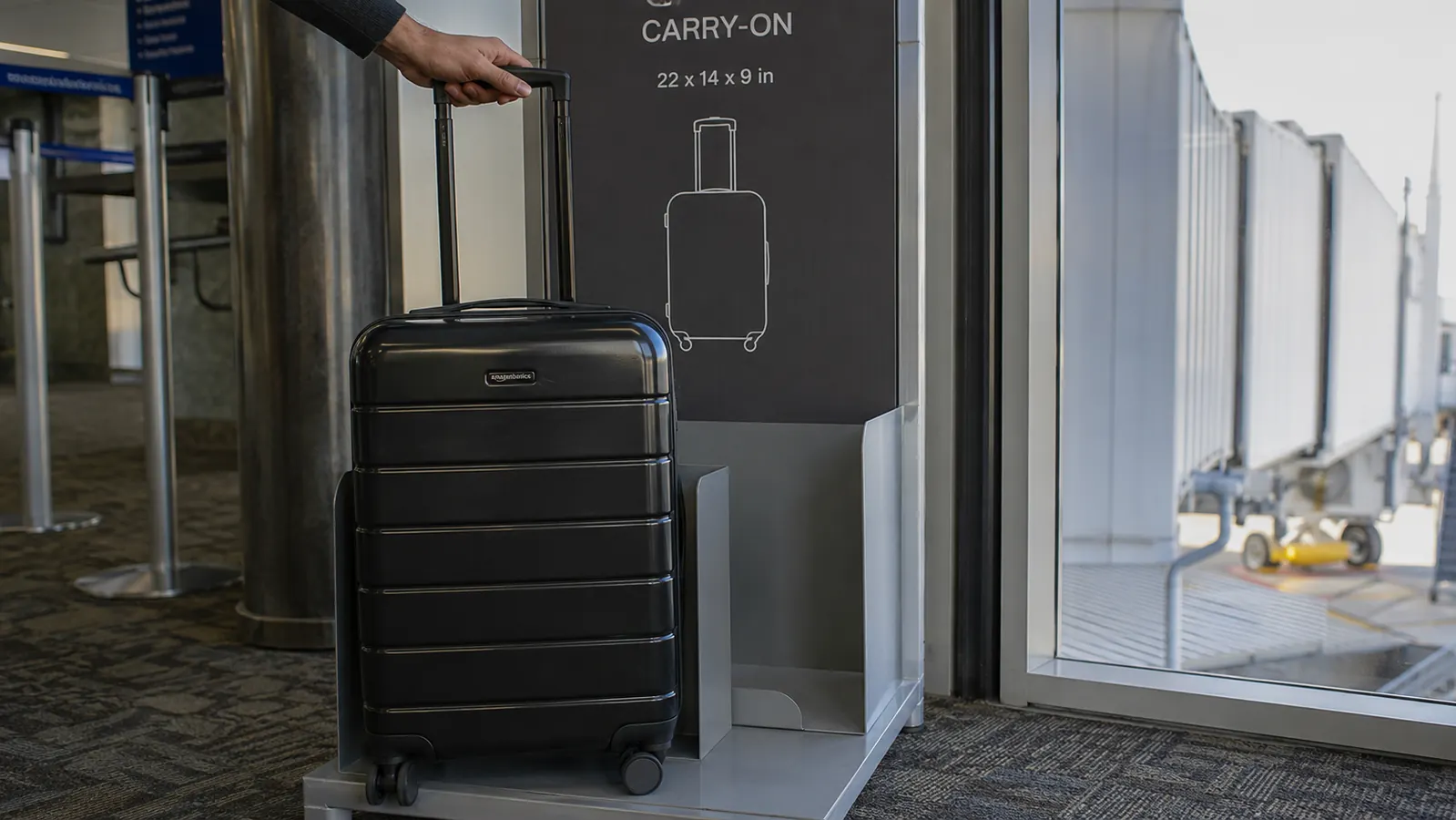
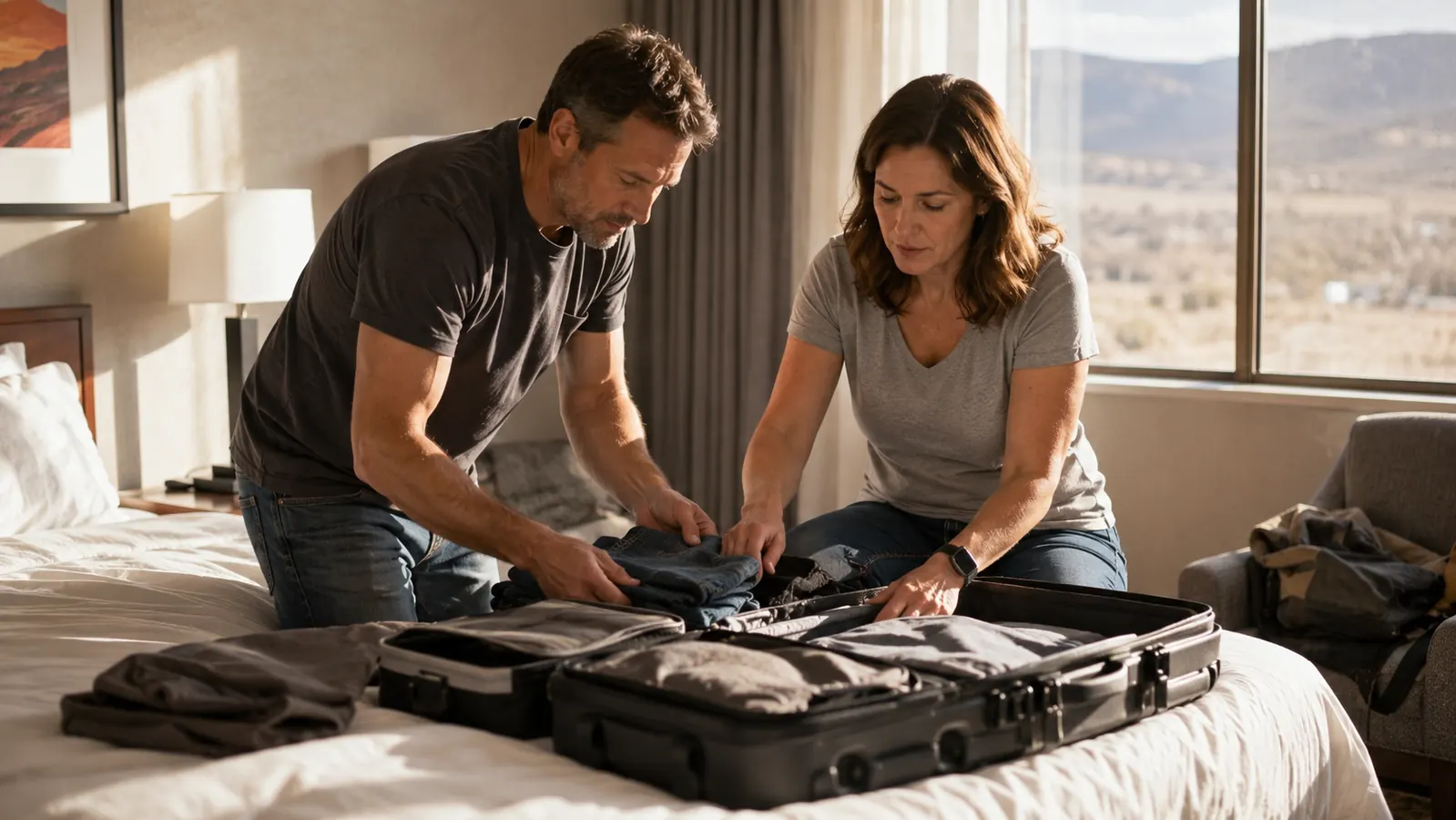
At 21 inches, this case is sized for the common domestic carry-on guideline of roughly 22 by 14 by 9 inches, though carry-on sizing rules vary by airline and change without much notice, so I always confirm the current limit with the airline before a trip rather than assuming last year's rule still applies. In practice, unexpanded, it holds about four days of clothes for me, meaning five or six shirts, two pairs of pants, underwear and socks for the trip, a light jacket, and a dopp kit, with a little room left for shoes packed along one side. Expanded, that stretches to closer to a full week if I am willing to pack tighter and skip the bulkier jacket.
The single largest zippered compartment does not have dividers, so I run two packing cubes inside it to keep clothes from shifting into one wrinkled pile by the time I land. The interior has a simple cross-strap to hold everything down on one side and a mesh zip pocket on the lid for smaller items like chargers or a paperback. It is a straightforward interior, not a fancy one, but it has never left me short on space for the kind of trips I actually take.
Fitting the Overhead Bin, Gate Checks, and Regional Jets
This is the category where the Amazon Basics earned my trust the fastest. On roughly two dozen mainline flights, it has fit into the overhead bin without a second look from a gate agent, sliding in wheels-first the way most bins are shaped for. On the smaller regional jets, where bins are noticeably shallower, I have had it gate-checked more often than not, which is standard for that aircraft type rather than a fault of the bag's size.
I have run it through an airline's gate sizer frame twice out of curiosity rather than necessity, since gate agents mostly eyeball bags rather than measuring them, and it slid through cleanly both times without me having to compress the shell or force it. That said, since airline dimension policies are not identical and change without much notice, I would never plan a trip around a hard rule for a specific airline. I check the current carry-on policy for whichever airline I am flying before every trip, and I would tell anyone buying this bag to do the same rather than trusting a suitcase spec sheet alone.
Empty weight matters here too. This case comes in light enough that even loaded close to its expanded capacity, I have never come close to a weight limit for a carry-on, which is not something I can say about every hardside bag in this size class. Anyone deciding between a hardside case like this one and a softer-sided alternative should look at our side-by-side comparison against a Samsonite carry-on before settling on which style fits how they actually pack.
Where It Falls Short
Nothing about the Amazon Basics is flawless, and a year of steady flying surfaced a handful of real complaints. The rear left wheel's faint click has not gone away, and I expect it will only get more noticeable with another year of use. The telescoping handle needs a firmer first pull than it used to, and the main zipper pull-tab has developed the same slight looseness that eventually killed my last two suitcases, though it has held so far. The lack of any interior divider or garment sleeve means I am relying on packing cubes to keep clothes organized, which is an extra purchase most travelers will end up making anyway.
I would also flag that the corners, while uncracked, show the most cosmetic wear of any part of the case. If you care about a suitcase looking pristine after a year of real travel, this is not that bag. It looks like it has done a year of work, because it has.
What I Liked
- No cracks or stress marks in the shell after roughly 30 flights and repeated gate checks
- Both main zippers still run smoothly around every corner with zero jams in a year
- Fits standard domestic overhead bins on nearly every mainline flight without issue
- Expansion zipper still opens and closes cleanly for extra packing space
- Empty weight leaves plenty of room under carry-on weight limits even packed full
Where It Falls Short
- One rear spinner wheel has developed a faint click and noticeable flat spot by month six
- Telescoping handle needs a firmer pull to extend than it did new
- Main zipper pull-tab has started to feel slightly loose at the base
- No interior dividers or garment sleeve, so packing cubes are basically required
- Corners show real cosmetic wear after a year of gate checks and road trip use
It looks like it has done a year of work, because it has, and that is a better sign than a suitcase that still looks brand new.
Who This Is For
If you fly several times a year on domestic routes and want a hardside carry-on that survives gate checks and overhead bins without turning into a hassle, this bag has earned that role for me over a full year of real use. It has not needed a single repair, and the wear it shows is cosmetic rather than functional. Anyone weighing whether a hardside spinner is even the right call for their trip pattern should read our broader case for why a hardside carry-on saves time at the airport before deciding.
Who Should Skip It
If you are hard on your gear, throw bags into a truck bed or cargo rack rather than rolling them on smooth floors, or you need a bag that still looks brand new after a year, this is not the case for you. The cosmetic wear on the corners and wheels will bother you faster than it bothered me. I would also skip it if you regularly need to check a bag rather than carry it on, since the shell is built for carry-on handling, not for the rougher treatment checked luggage sometimes gets on the belt.
A Year and 30 Flights Later, It's Still My Go-To Carry-On
No cracked shell, no broken zippers, and only the kind of wear you'd expect from real use. If you fly often and want a carry-on that actually holds up, this is worth a look.
Amazon Check Today's Price on Amazon →