
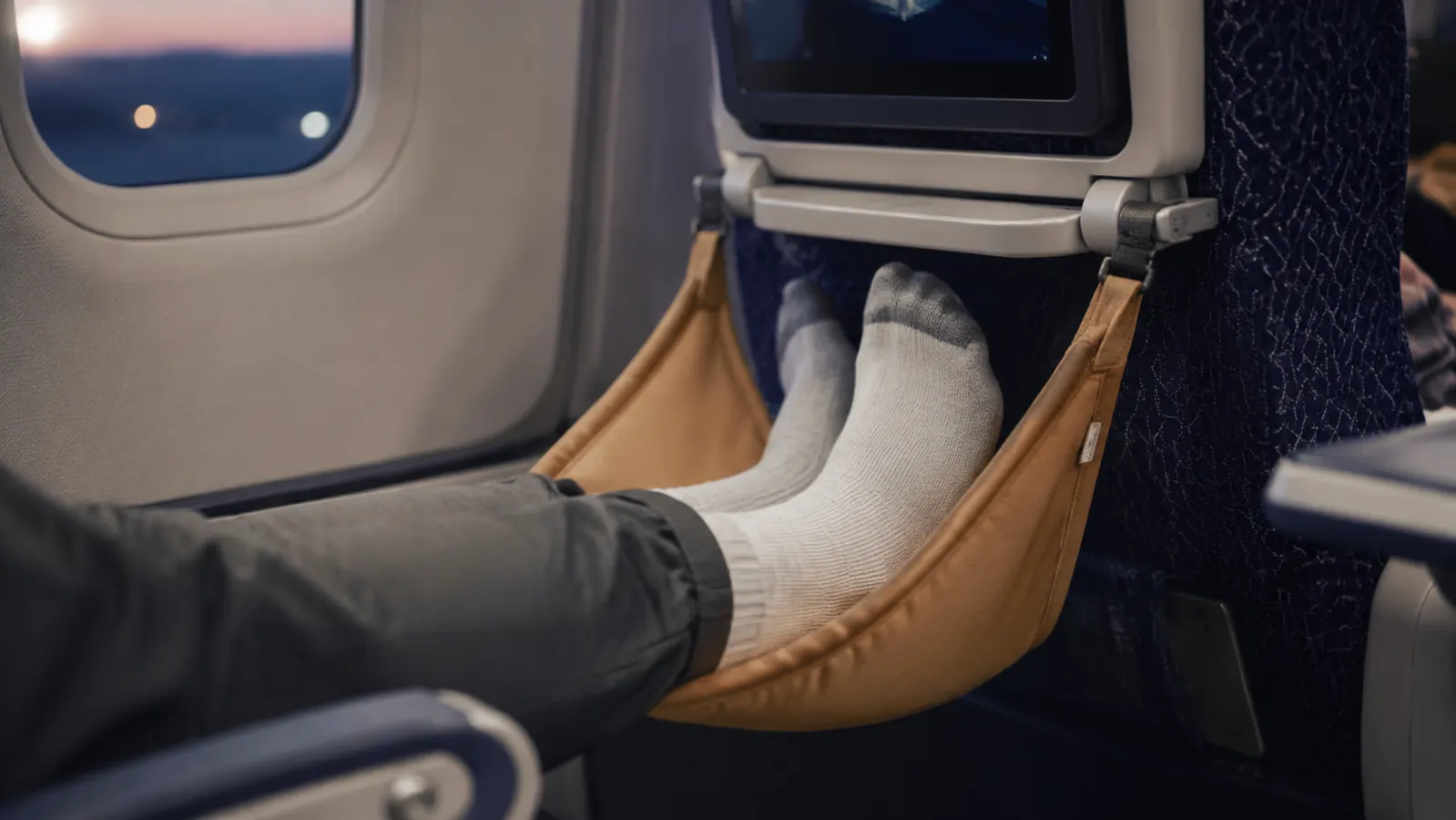
I bought the Angemay memory foam footrest after a 9 hour and 40 minute flight to Auckland where my feet were still throbbing two days later, and I told myself I was done gambling on cheap airline gear that looked good in a listing photo and fell apart by the second trip. That was six months and roughly 20 flights ago, including three long-haul legs over 9 hours, a string of 3 to 5 hour domestic hops between Boise and the coasts, and enough short regional connections that I stopped counting. My wife Rennie flies with me on most of these, and she has her own unit now too, so this review covers two footrests logging real hours in real coach seats, not one unit tested once and written up from memory.
I want to be upfront about something before I get into the details. The Angemay sits at a 4.0 star average across nearly 3,800 reviews, and that is noticeably lower than most of the gear I have tested for this site. That number is not a fluke or a case of a few angry outliers dragging down an otherwise flawless product. After six months of daily-ish use across two units, I understand exactly why the rating sits where it does, and I am not going to write around that just because the comfort, when it works, is genuinely good.
The Quick Verdict
Real comfort on the flights where it fits your seat and your legs, but the strap hardware and the fit-for-everyone marketing both need an asterisk after six months of use.
Amazon Check Today's Price →Tired of Landing With Swollen Feet and a Stiff Lower Back?
On the flights where this footrest actually fit my tray table and my leg length, it turned a miserable coach seat into something I could sleep in for four or five hours at a stretch.
Amazon Check Today's Price on Amazon →How I've Used It Over Six Months
The setup is the same every time. You loop the top strap over the tray table arm, or in some cases over the tray table itself once it is folded down, buckle it snug, then let the hammock section drop to whatever height the row in front allows. The foam pad clips onto the bottom of the hammock and that is where your feet actually rest. It took me two flights to get the strap tension right on the first unit. Too loose and the hammock sags until your knees are nearly at your chest. Too tight and it pulls the tray table forward at an angle that makes the tray itself useless for a laptop or a drink. There is a small learning curve here that the packaging does not really prepare you for, and I would have appreciated a printed diagram rather than working it out through trial and error somewhere over Nebraska.
Once I dialed it in, I used it on every flight over about 2.5 hours, which by my rough count is 16 of the 20 flights over the six months. I stopped bothering with it on short hops under 90 minutes since the setup and teardown time barely pays for itself, and boarding crews are already asking everyone to stow trays for taxi twice in one short flight anyway. On the Auckland leg and a similar 8 hour flight to Frankfurt in March, it was the difference between actually dozing for stretches and sitting bolt upright the whole way.
Rennie's experience running a second unit alongside mine has been useful for spotting patterns I would have missed testing just one. She is 5 foot 2 and I am 5 foot 11, and that height gap turned out to matter more than either of us expected going in, which I get into further down. We also fly with different carriers depending on the route, and that variation in tray table hardware across airlines turned out to matter just as much as our height difference.
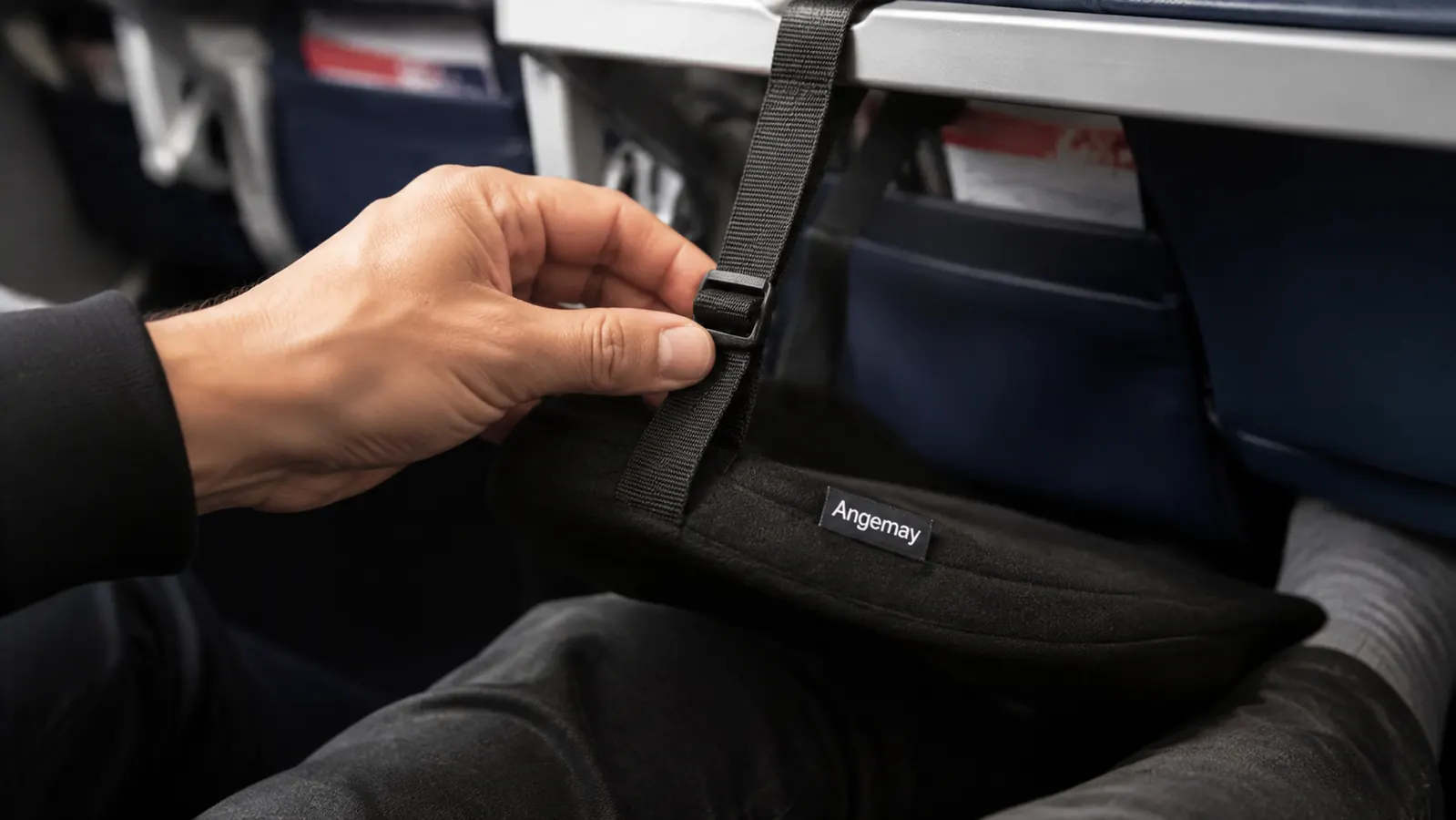
Strap Durability After Six Months
This is where the honest story starts. The main hanging strap on my unit is still fully intact after six months, no fraying, no stitching pulled loose. The adjustment buckle is the part that has not held up as well. By month four it developed a slight slip, meaning on a couple of flights I noticed the hammock had dropped an inch or two lower than where I set it, usually somewhere over the middle of the flight when I'd shifted my weight or crossed my legs on top of it. It never failed outright and never dumped my feet on the floor, but it stopped being something I could set once and trust for a whole flight.
Rennie's unit developed the same slip closer to month three, a bit earlier than mine, which lines up with reading through other owner feedback before I bought it. The buckle hardware is plastic, not metal, and it is clearly the weak point in an otherwise reasonably built product. I have not had a strap snap or a stitch seam blow out on either unit, which matters, but I would not call the buckle bulletproof either. If you fly with one of these every week rather than the roughly three times a month Rennie and I average, I would expect that buckle slip to show up sooner. I have started giving the buckle a firm re-tighten about halfway through any flight longer than 4 hours, which has kept it from drifting any further on the last several trips.
Adjustment Range and Who It Actually Fits
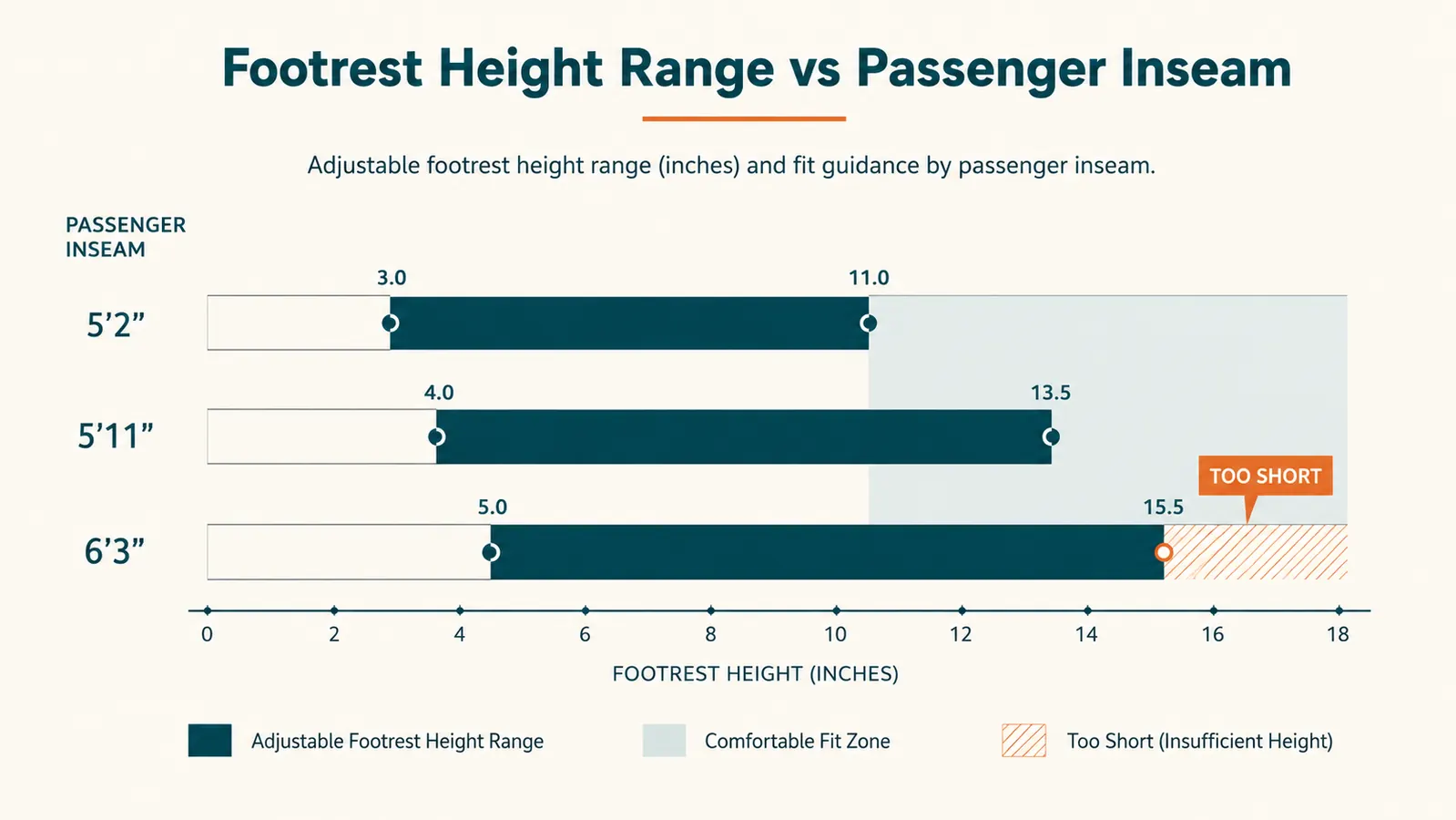
The footrest advertises itself as a fit for essentially anyone, and six months of use across two different body heights tells me that claim is optimistic. Rennie, at 5 foot 2, has plenty of adjustment room to spare and can set the hammock at a height where her knees sit comfortably bent, almost like a footstool at home. I am 5 foot 11 with an inseam a good bit longer than hers, and on economy seats with a normal amount of pitch, I run out of adjustable strap length before I run out of leg. On a few specific aircraft, older regional jets with tighter seat pitch in particular, there simply is not enough vertical drop available even at the shortest strap setting, and my knees end up jammed higher than is comfortable for a multi-hour flight.
On flights with a bit more legroom, an exit row once and a couple of standard economy seats on wider-body aircraft, the fit was genuinely good for me too. So the honest answer is that this footrest fits shorter to average-height flyers reliably, and fits taller flyers only on the seats that already had a bit of room to begin with. If you are over about 5 foot 10 and mostly fly standard economy with tight pitch, go in expecting a coin flip rather than a guarantee, and read the side-by-side comparison in our Angemay versus Basic Concepts hammock breakdown before you commit, since the fit range is one of the bigger differences between the two.
Packability for Someone Who Flies Regularly
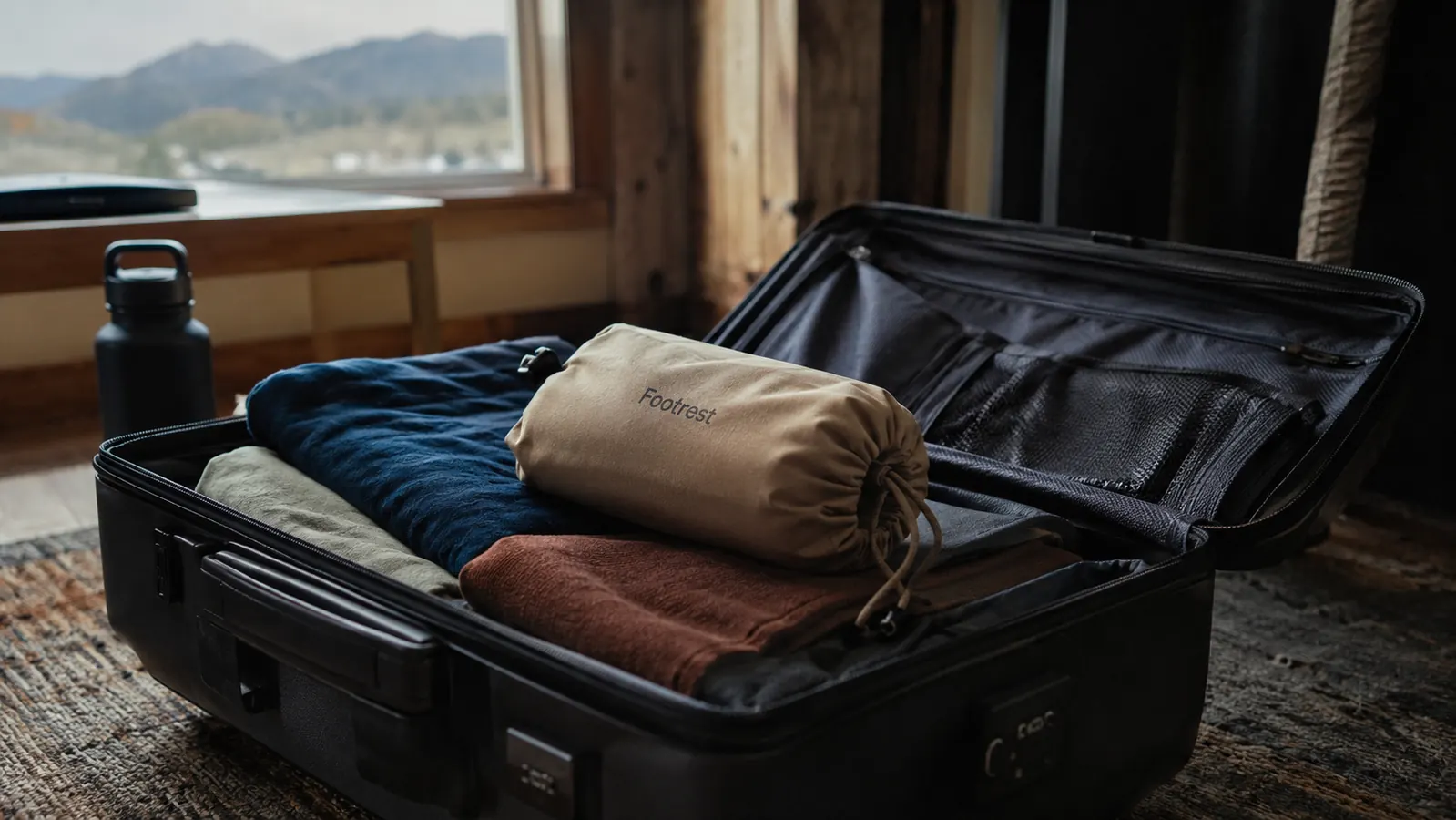
This part of the product has genuinely impressed me. The whole unit, straps and foam pad together, compresses down and rolls into a drawstring pouch about the size of a rolled-up pair of socks, maybe a bit bigger. It weighs next to nothing, and I have carried it in the outer pocket of my carry-on on every one of the 20 flights without it eating into space I needed for anything else. The memory foam does not need to fully re-expand between uses either. I have pulled it out of the pouch mid-flight and had it usable within about 30 seconds, no fluffing or waiting required.
The foam pad itself has held its shape better than I expected given how many times it has been compressed and released over six months. There is a very slight softening compared to when it was new, the kind of thing you would only notice pressing it side by side against a fresh unit, and it has not affected how it feels underfoot in any way I'd call meaningful. The drawstring pouch itself has held up fine too, though I did have to re-tie the cord end once after it worked loose somewhere in a suitcase.
Seat Types and Tray Tables It Doesn't Work With
Not every seat plays nice with this design, and this is worth knowing before you buy rather than after you're already in seat 34C. Bulkhead rows almost never work since there is no tray table arm to hook onto at all. Some newer aircraft have tray tables that fold out from the armrest rather than the seatback in front, and on two of those flights I could not get a secure hook point anywhere that felt safe. A few premium economy seats have thicker, sturdier tray table arms that the strap does not wrap around cleanly, and I had one uncomfortable moment on a flight to Denver where the strap slipped partway off the arm mid-flight while my feet were resting on it, which startled me more than it hurt me but was enough to make me double-check the hook every single flight since.
There is also a rules problem that has nothing to do with the product itself. Some airlines and individual flight crews restrict anything that hangs from or attaches to a tray table, and I have had a flight attendant on a domestic leg ask me to take mine down during meal service without much explanation beyond airline policy. It went right back into the pouch and I did not argue. The rule is not consistent across carriers or even across crews on the same airline, so go in prepared to stow it the moment anyone asks rather than assuming it is a settled matter. I would not buy this expecting guaranteed use on every flight you take.
What I Liked
- Genuinely improved comfort and helped me actually sleep on three long-haul flights over 8 hours
- Packs down to roughly sock-sized and adds almost no weight to a carry-on
- Memory foam pad has held its shape well after six months of repeated compression
- Main hanging strap shows no fraying or stitching failure after roughly 20 flights
- Works reliably for shorter to average-height flyers on most standard economy seats
Where It Falls Short
- Plastic adjustment buckle developed a noticeable slip by month three or four on both units
- Not enough vertical drop for taller flyers on aircraft with tighter seat pitch
- Does not work at all on bulkhead rows or some armrest-mounted tray tables
- One strap slipped partway off a thicker tray table arm mid-flight, which was unsettling
- Airline and crew rules on hanging tray table accessories are inconsistent, so it may get flagged and stowed
The buckle slipping mid-flight over Denver taught me to check the hook every single time, which is not something you should have to do with gear you paid for peace of mind.
Who This Is For
If you are average height or shorter, fly economy with at least a normal amount of seat pitch, and take enough long or medium flights that packing something small is worth the payoff, this footrest earns its spot in a carry-on. Rennie's experience over six months has been close to trouble-free, and mine has been good on the flights where my legs actually had room to use it properly. Anyone weighing whether a footrest is worth adding to their travel routine at all should read our broader case in 10 reasons a footrest improves flights, which covers the upside beyond just this one model.
Who Should Skip It
If you are taller than about 5 foot 10 and mostly fly standard economy on aircraft with tight seat pitch, I would not count on this fitting well enough to justify buying it. I would also skip it if you regularly fly bulkhead rows, armrest-mounted tray tables, or airlines known for stricter cabin crews, since you may end up stowing it more often than using it. And if long stretches sitting still on a flight already concern you for circulation or swelling, that is worth raising with your doctor directly rather than treating any footrest, this one included, as a solution to a health question.
Still Earning Its Spot in the Carry-On, With Eyes Open About the Buckle
Six months and 20 flights in, it still comes with me on anything over 2.5 hours. Just know the fit depends on your height and your seat, and read the tray table rules for your airline before you fly.
Amazon Check Today's Price on Amazon →