
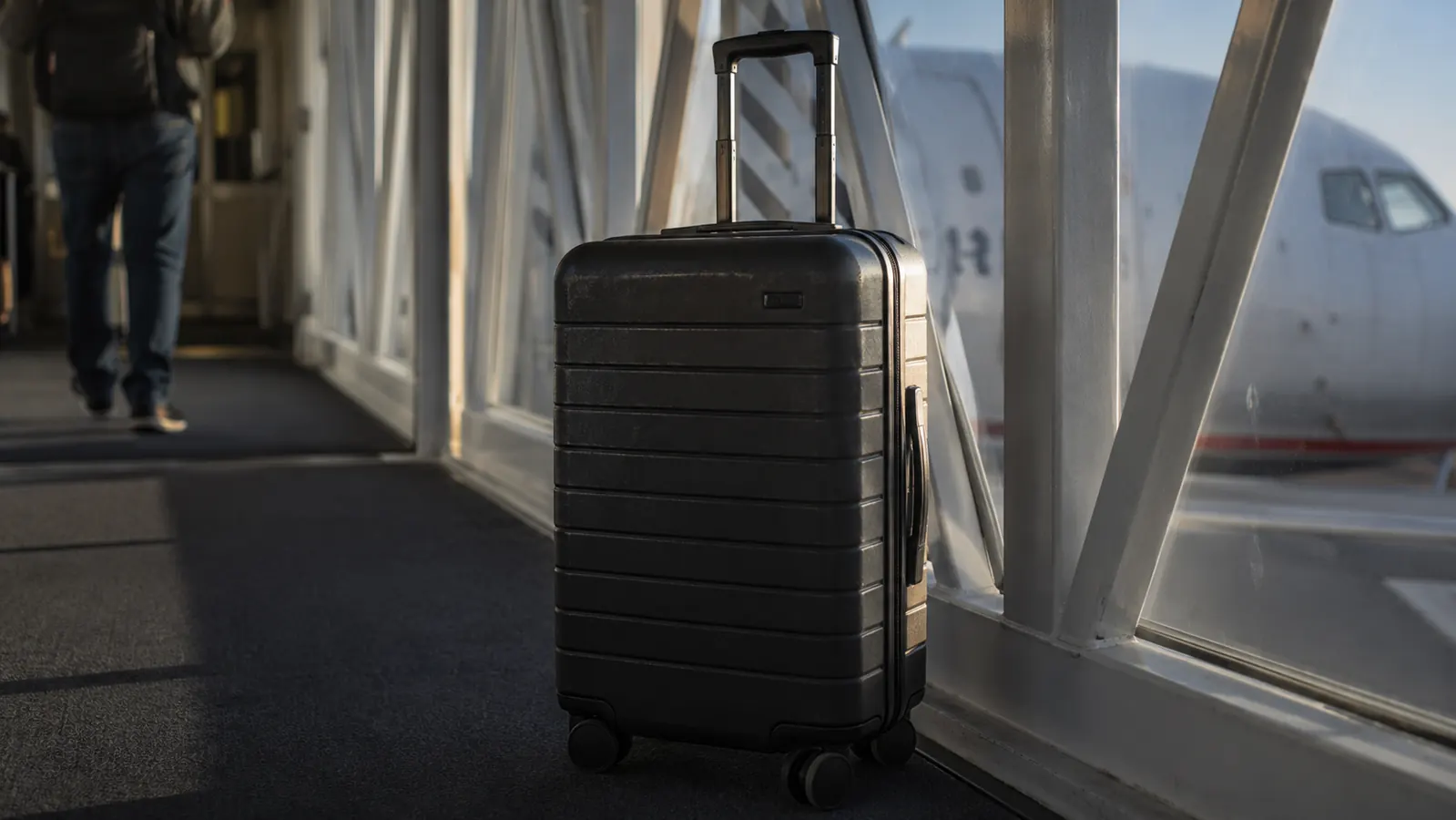
Thirty flights is enough distance to stop being polite about a piece of luggage. My long-term review of this Amazon Basics 21-inch hardside carry-on already walked through the year-by-year wear pattern, so I am not going to retread that ground here. What I want to get into instead is the stuff that only shows up once you have actually lived with the bag long enough to hit its real weak points, the stuff nobody selling you a suitcase online is going to volunteer. This is the honest version: the scuffing on the shell that starts almost immediately, what actually happens when a wheel gives out on a hardside case built like this one, how the zippers behave when you pack the case to its expanded limit instead of half full, and how it holds up the day gate staff genuinely mishandle it instead of just tossing it onto a cart.
None of this makes the bag a bad buy. My wife Rennie and I still travel with it on most of our flights out of Boise, and it has earned its keep. But there is a real gap between what a case like this is built to survive and what a premium hardside from a brand with an actual repair network is built to survive, and thirty flights in, I can point to exactly where that gap shows up. If you are weighing whether to spend more on something like a Samsonite instead, the honest answer depends on how hard you are on your gear, not just on how the spec sheet reads.
The Quick Verdict
A capable budget hardside for occasional flyers, but the fixed wheel assembly, the thin warranty coverage, and the shell finish mean you are accepting real tradeoffs once the bag gets past its first year of hard use.
Amazon Check Today's Price →Before You Buy Another Suitcase You Can't Actually Repair
This is still the Amazon Basics I check most often before a trip. Here's what thirty flights taught me about exactly where it holds up and where it genuinely doesn't.
Amazon Check Today's Price on Amazon →How I Actually Tested This
Rather than just flying with the bag and jotting down whatever happened to catch my eye, I started tracking a specific handful of stress points once I got past the first dozen flights or so. I photographed the same three corners of the shell before and after trips to see how fast scuffing actually accumulated rather than trusting my memory. I made a point of packing the case to its full expanded capacity on at least a third of the trips, since most reviews only ever describe a half-packed bag rolling smoothly through a terminal. And I let it get gate-checked on regional jets whenever the option came up instead of fighting to keep it in the cabin, because that is where a hardside case actually earns or loses my trust.
I also went back and read through the actual warranty terms rather than assuming a hardside case this size comes with the kind of coverage a premium brand offers, since that is the sort of thing you only think to check after something has already gone wrong. What follows is what I found, organized around the five things I think a buyer genuinely deserves to know before they add this to their cart, not after.
The Shell Scuffs Faster Than the Photos Suggest
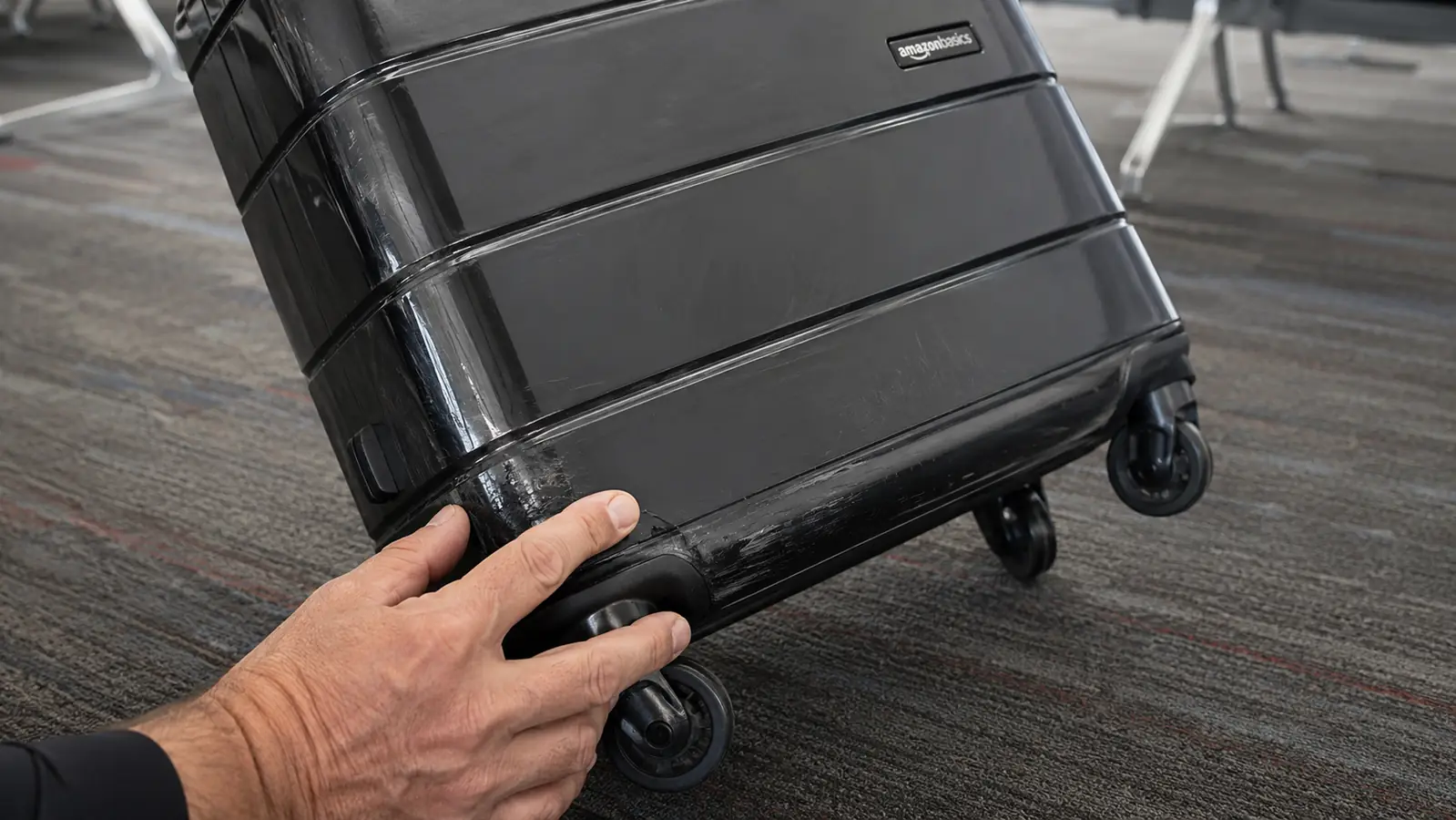
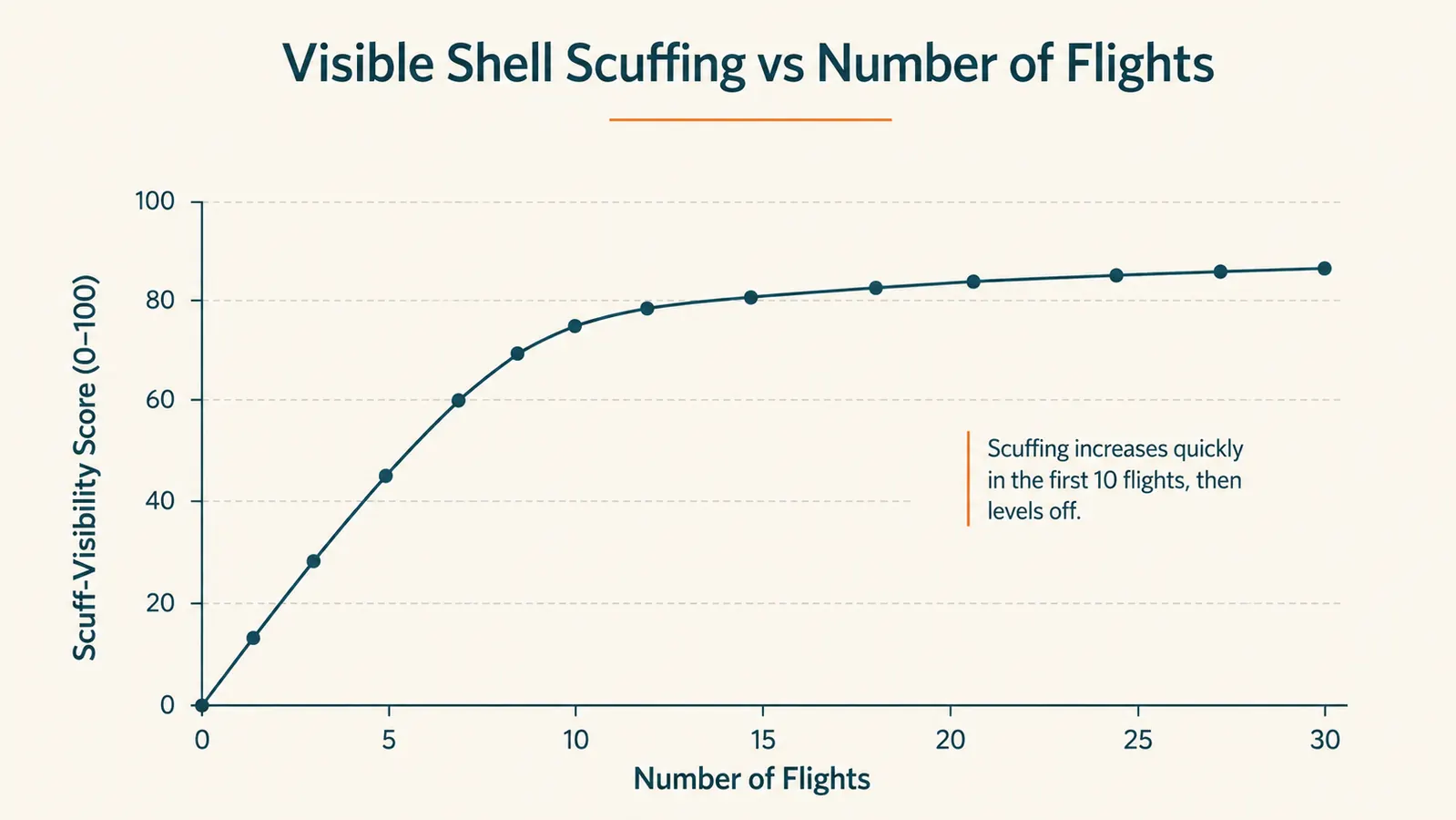
The listing calls the shell scratch-resistant, and technically that is accurate. It is not the same as scratch-proof, and the gap between those two words showed up on my very first trip. The bag came home from a single round of overhead bin loading and jet bridge shuffling with a faint web of hairline scuff marks across both lower corners, the kind of marks you only notice when the light hits the shell at an angle, like standing near a terminal window at golden hour. By flight ten, that faint web had spread to most of the panel below the handle, where luggage carts and other bags rub against it during boarding.
None of this is structural. The shell has not cracked, chipped, or developed a single stress fracture in thirty flights. What it has done is lose its showroom finish fast, and on a glossy black shell like this one, every scuff shows up as a lighter gray line where the surface coating gets abraded away. If you photograph your bag for social media or just like the look of a case that still looks new after a few months, this is the honest heads up nobody puts in the product description. Expect the cosmetic finish to start showing wear inside the first handful of trips, well before anything about the bag's function is actually compromised.
The Wheels Are Fixed to the Shell, Not a Swappable Cassette
This is the part most buyers do not think to ask about until it is too late to matter. On a lot of premium hardside luggage, the spinner wheels sit in a removable cassette housing that snaps or screws into the corner of the case, which means a worn or cracked wheel is a five-minute repair with a replacement part. On this bag, each wheel is riveted directly into a housing molded as part of the shell itself. There is no cassette, no screw-in unit, and as far as I can find, no OEM replacement wheel sold separately for this exact model.
That is a completely normal design choice at this price point, and I am not calling it a defect. But it changes the math on what happens when a wheel actually fails rather than just getting noisy. By flight 25, the faint click I first noticed months earlier had turned into a genuine wobble on tight turns, enough that I started rolling the bag at a slight angle out of habit to keep it tracking straight. If that wheel had seized entirely or cracked at the axle, the honest answer is that I would not be repairing it. I would be retiring the bag and starting over, because there is no serviceable part to replace and no drop-in fix the way there is on a case built with cassette wheels.
Pack It to the Expansion Limit and the Zipper Tells You About It
The expansion zipper works fine on a case packed at half or three-quarters capacity, gliding around every corner without any resistance. Pack it to the full expanded limit, the kind of packing where you are bringing home souvenirs and everything you left with, and the story changes. On two separate trips where I pushed the case to that limit, closing the main zipper took both hands and steady, deliberate pressure rather than one smooth pull. The teeth visibly pucker along the bottom seam under that much internal pressure, and at the corners, where the zipper track curves tightest, I could feel real resistance rather than the effortless glide it has when the bag is packed more reasonably.
Nothing has torn or separated, and I want to be fair about that. But a fully expanded, fully packed zipper under that kind of tension is exactly the failure point that eventually kills most soft-seamed luggage, and I would not want to find out what a rushed connection and an impatient tug does to a seam that is already under that much strain. If you plan to use the expansion feature regularly and pack this case to its absolute limit on most trips, treat the zipper gently at full capacity rather than yanking it the way you would on a bag packed at half that volume.
Do Not Expect Much From the Warranty
This is the tradeoff that gets talked about least, and it is the one I think matters most once a bag is a year or two old. Amazon Basics luggage carries a limited manufacturer warranty handled through Amazon customer service, which in practice means a refund or a replacement unit if something fails within the covered window, not a repair. There is no dedicated repair depot, no loaner bag while yours gets fixed, and no network of authorized repair shops the way an established luggage brand offers. Once you are past the covered window, a broken wheel housing or a failed zipper pull is simply the end of the bag's useful life.
Compare that to what a brand like Samsonite backs its cases with, and the difference is real. I put together a full side-by-side on what the price difference between this bag and a Samsonite Freeform actually buys you, and warranty support is a bigger part of that gap than most buyers assume going in. For occasional flyers who replace a carry-on every few years anyway, this tradeoff barely matters. For anyone flying often enough to genuinely wear a bag out, it is worth going in with clear eyes about what happens after something breaks.
What Actually Happens When It Gets Handled Roughly
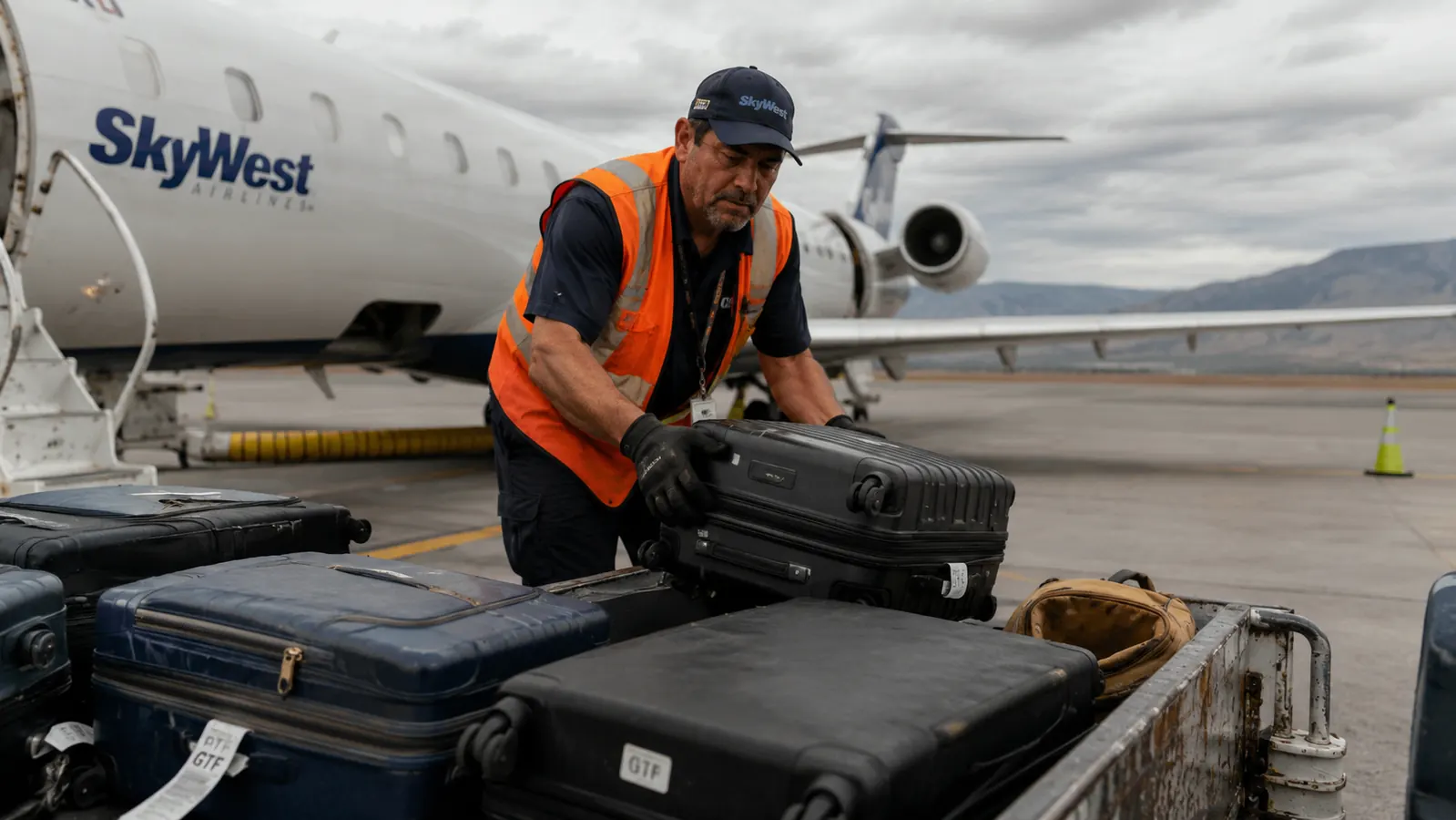
Gate-checking this bag on regional jets has been routine for close to a third of my flights, and most of those handoffs are unremarkable, a cart ride down to the tarmac and back up the jet bridge stairs at the destination. One trip was not unremarkable. A ground crew member at a connecting airport swung the bag off a loaded cart and it landed corner-first on the tarmac from about waist height, hard enough that I heard it from the jet bridge door. When I picked it back up at the bottom of the stairs, that corner had a visible impact scuff down to the bare plastic, lighter in color than the surrounding shell, though the shell itself held its shape with no crack and no give when I pressed on it.
That single drop is the most honest data point I have on how this bag handles genuinely rough treatment rather than routine wear. The shell survived a real impact without cracking, which says something good about the plastic itself. But it did not survive it without a mark, and if pristine cosmetics matter to you as much as structural integrity, one bad handoff is enough to leave a permanent scuff you will see every time you grab the bag off a carousel or a cart for the rest of its life.
What I Liked
- Shell has taken thirty flights and one hard tarmac drop without a single crack or stress fracture
- Zippers still close fully even under real strain at full expanded capacity
- Rolls straight and true on smooth terminal floors even with a wobble developing in one wheel
- Empty weight leaves plenty of margin for airline carry-on weight limits even packed full
- Cosmetic wear is honest, predictable, and does not affect how the bag actually functions
Where It Falls Short
- Visible shell scuffing starts within the first few flights, faster than the listing photos suggest
- Wheels are fixed into the shell with no cassette or replaceable part if one fails outright
- Zipper needs deliberate, gentle handling when packed to the full expansion limit
- Warranty support is a refund or replacement, not a repair, and ends after a limited window
- A single rough gate-check drop leaves a permanent, visible impact mark
The shell survived a real drop without cracking. It did not survive it without a mark, and that difference is the honest tradeoff of a budget hardside case.
Who This Is For
The Amazon Basics makes sense for travelers who fly a handful of times a year, who are comfortable replacing a carry-on every few years rather than expecting one to last a decade, and who care more about function than a showroom finish. If a checked-bag fee was ever the thing that finally pushed you toward carry-on-only travel, the case for making that switch permanent is worth reading in our piece on the baggage fee that changed how one traveler packs for good. This bag fits that kind of traveler well: reliable enough for routine trips, honest about its limits, and priced to be replaced rather than repaired.
It also suits anyone who values structural durability over cosmetic perfection. Thirty flights and one hard drop in, the shell has never cracked, which is the part of the bag that actually protects what is inside it.
Who Should Skip It
If you fly often enough that a fixed, non-serviceable wheel assembly is a real long-term liability rather than a minor detail, or if you want a case backed by an actual repair network instead of a refund window, this is not the bag for that. Anyone who wants their luggage to still look close to new after a year of travel will be frustrated by how quickly the shell picks up cosmetic scuffing. And if you regularly pack to the absolute expansion limit on every trip, the strain that puts on the zipper is worth weighing against a case built with a sturdier closure for that kind of load.
Know the Tradeoffs Before You Check Out
Thirty flights in, this bag has never cracked, but it has taught me exactly where a budget hardside case draws the line. If you travel with clear eyes about that, it's still a solid pick.
Amazon Check Today's Price on Amazon →