
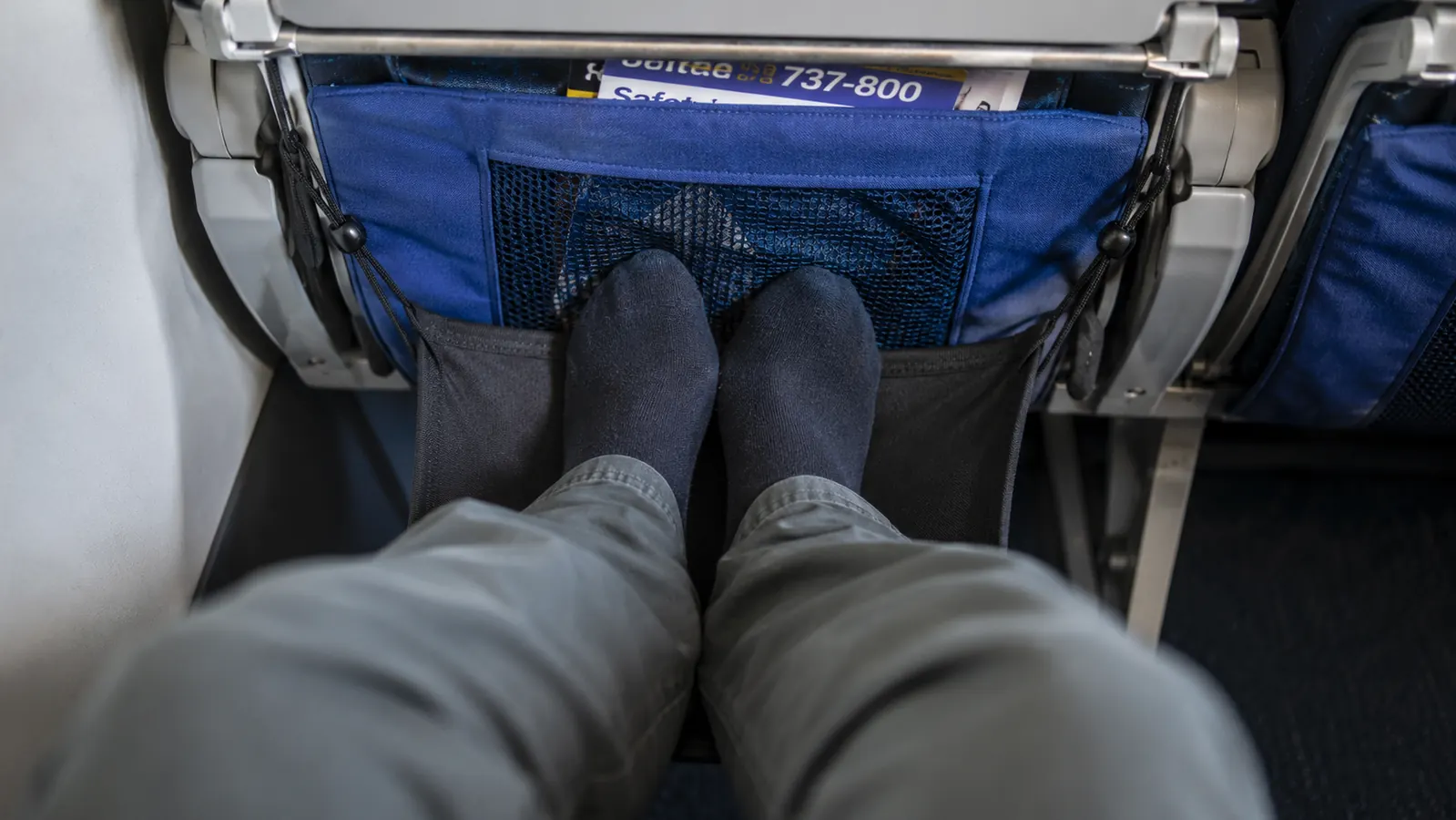
My long-term review of this Angemay footrest already covers the broad strokes of using it flight after flight, so I am not going to repeat that here. This one is about the stuff that only shows up once you have flown with it enough times to hit its real limits, the stuff that explains why this product sits at 4.0 stars instead of somewhere higher. That rating is not a fluke. When I went back through the owner reviews on Amazon before writing this, the complaints clustered around the same handful of things I had already run into myself: straps that loosen mid-flight, a hammock that does nothing at all in a bulkhead or exit row, and a fit that depends entirely on how tall you are and how the seat in front of you is built.
I still use this footrest. My wife Rennie and I fly out of Boise often enough that I have logged more than two dozen flights with it strapped to a tray table, and on the right flight, in the right seat, it genuinely helps. But there is a real gap between the product photos and how this thing actually hangs in a coach seat on a full flight, and I think that gap is exactly what is driving the mixed reviews. Here is the honest version, including the parts that do not make it into a five-star pitch.
The Quick Verdict
Genuinely useful for shorter travelers on a standard tray-table seat who don't mind re-cinching a strap mid-flight, and close to useless in a bulkhead, exit row, or for anyone with long legs.
Amazon Check Today's Price →Before You Assume It Works Like the Photos
This footrest earned its 4.0-star rating honestly, both the good and the frustrating parts. Here's what dozens of real flights taught me about where it actually delivers.
Amazon Check Today's Price on Amazon →How I've Actually Used It
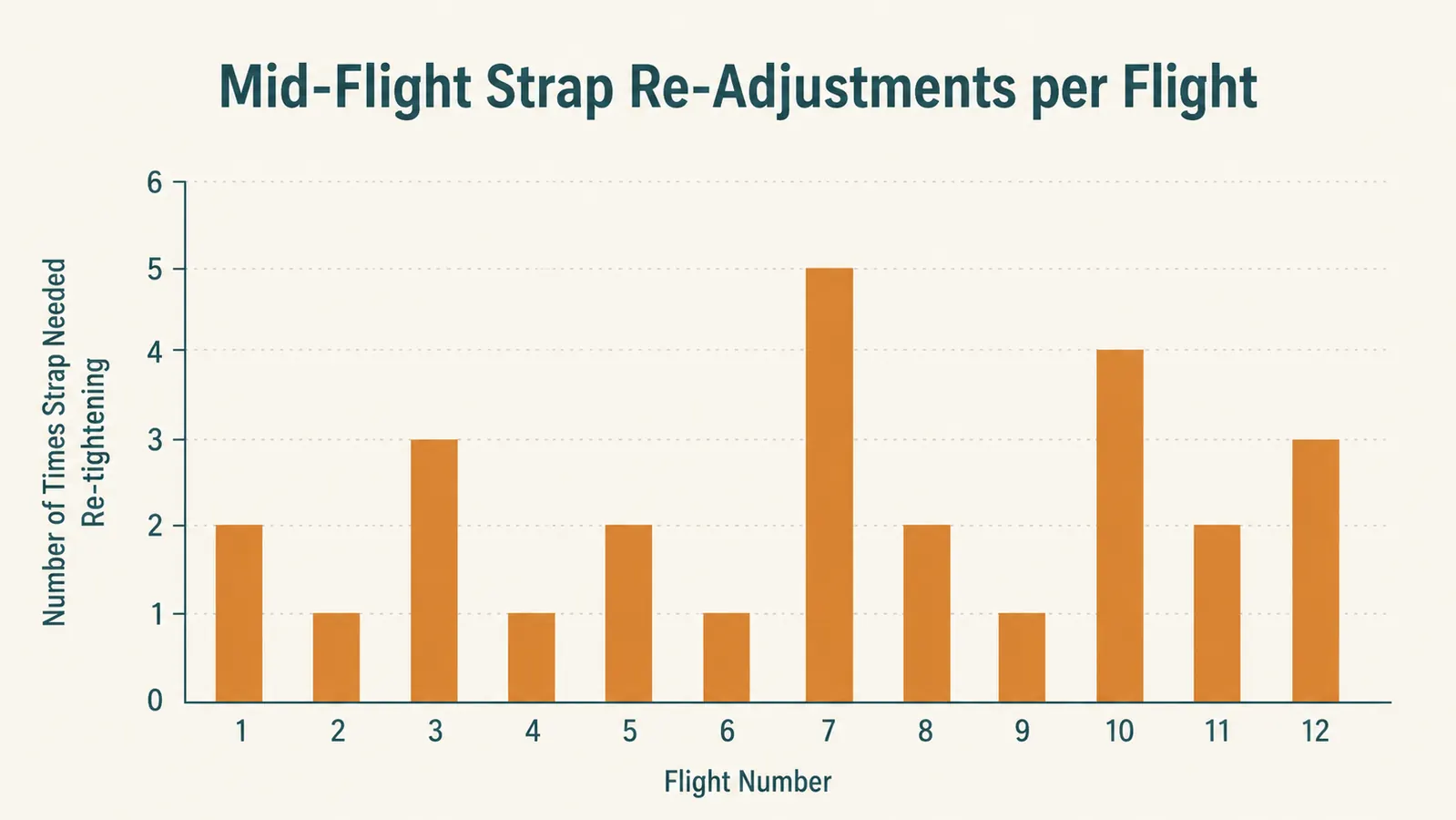
I started tracking this footrest the way I track most gear I write about, by paying attention to the specific moments where it either worked or failed instead of just filing away a general impression. On domestic flights out of Boise, most under four hours, I strapped it to the tray table before takeoff and left it set up for the duration, noting anytime I had to reach down and adjust anything. On two longer connections through Denver and Seattle, I tracked how the setup held up over a longer stretch and whether fatigue changed how much the sagging bothered me.
I also deliberately flew with it in different seat types rather than always picking the same aisle seat I default to. That included one bulkhead row on a Southwest flight and one exit row on a Delta flight, specifically because I wanted to see what happens when there is no tray table or seatback in front of you at all, since that is a scenario a lot of buyers do not think through before ordering. What follows is organized around the actual complaints I kept running into, cross-checked against what other owners say in the Amazon reviews, not just my own experience in isolation.
The Strap Needs Babysitting, Not Just Setup
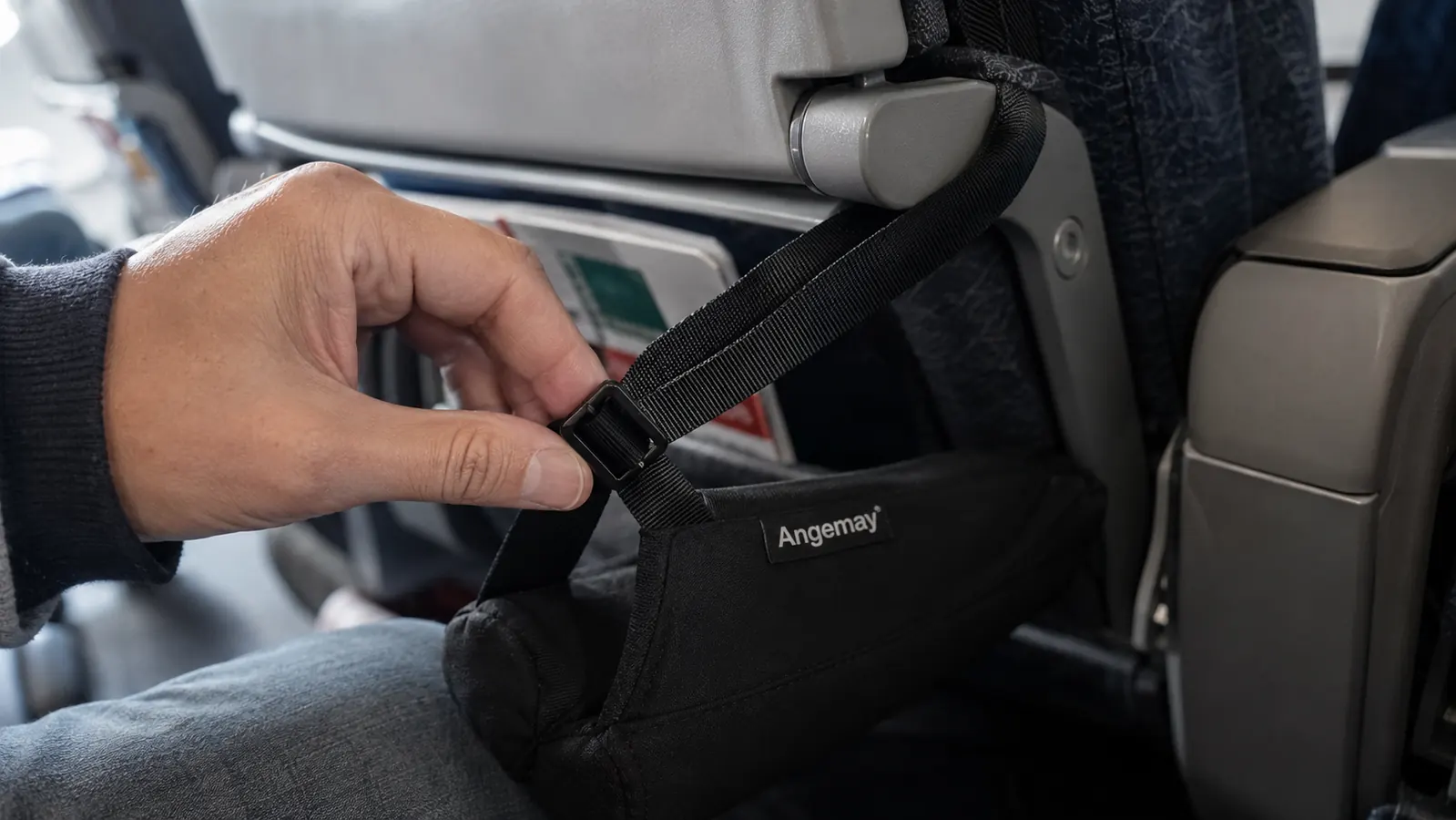
This is the single biggest gap between how this product is marketed and how it behaves in real use. The listing photos show a taut, evenly hung hammock, and that is exactly how it looks for the first twenty minutes after you cinch the strap down around the tray table arm. Then your feet settle into it, the webbing stretches slightly under sustained weight, and the whole thing sags an inch or two lower than where you set it. On a four-hour flight, I found myself reaching down to re-tighten the buckle at least once, and on the longer Denver connection, I did it three separate times before I stopped noticing the sag enough to leave it alone.
It is a strap-and-buckle system, not a rigid frame, so some settling is inherent to the design and not really a defect. But it is also exactly the kind of thing that reads as a minor annoyance in a five-minute unboxing video and as a genuine mid-flight chore over several hours in a cramped seat. Reading through the lower-starred owner reviews confirms this is not just my seat or my strap. Slippage and the need to re-adjust mid-flight is the single most repeated complaint across the review section, more common than any issue with the foam itself.
What helped me was cinching the strap down tighter than felt necessary before takeoff, tighter than the taut-photo look actually requires, so the first hour of natural stretch brought it down to where I actually wanted it rather than starting loose and getting worse from there. That is a workaround, not a fix, and it is worth knowing before you assume you can set this up once and forget about it for a six-hour flight.
It Only Works If the Seat in Front of You Cooperates
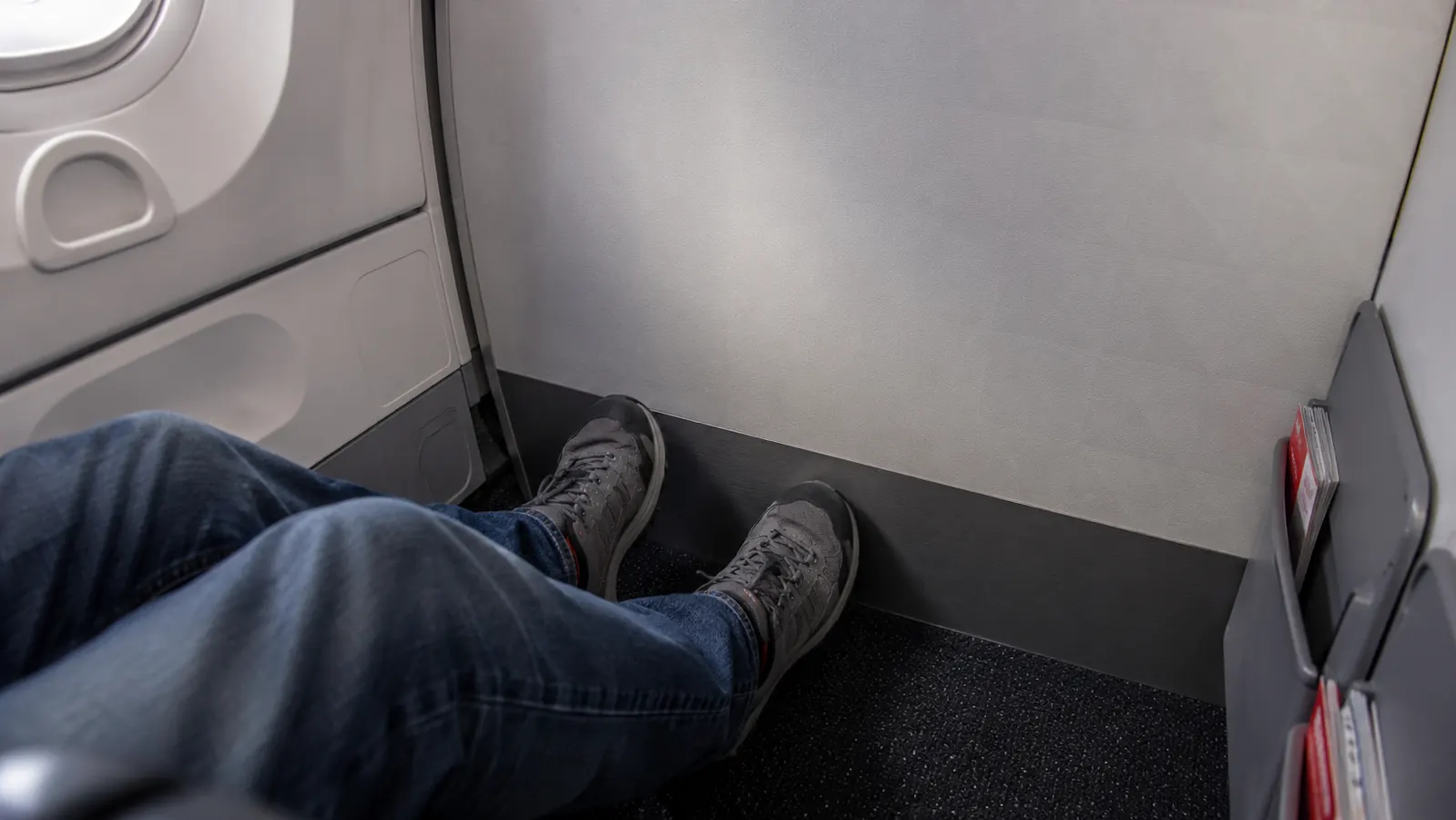
This footrest is entirely dependent on a tray table and a seatback to strap to. That sounds obvious written down, but it is easy to overlook when you are buying this for a specific upcoming trip without checking your actual seat assignment first. On the exit row flight I mentioned, there was simply nothing to attach it to. No tray table folds down from the seat in front because there is no seat close enough, and the footrest sat unused in my bag for the entire flight. The same thing happened on the bulkhead row, where the tray table folds out of the armrest instead of the seatback ahead, which changes the geometry enough that the strap has nothing stable to loop around.
If you already know you tend to book bulkhead or exit rows for the extra legroom, which is exactly the kind of traveler who might otherwise think they need this least, this product genuinely has nothing to offer you. It is worth checking your seat map before the flight rather than assuming a hanging footrest works in every configuration, because on those specific rows, it does not work at all.
There is a second layer to this same dependency. Even on a normal tray-table seat, how well the footrest hangs depends on the tray table's own hinge stiffness and how far it extends, which varies by aircraft and by airline. On an older regional jet with a looser tray hinge, I noticed more wobble in the whole setup than I got on a newer mainline aircraft with a tighter mechanism. That is not something Angemay controls, and it is not something you can check before buying, but it is part of why results vary so much between owners depending on which planes they mostly fly.
Height and Leg Length Change the Math Completely
I am close to average height, and the footrest sits at a reasonable angle for me once it is adjusted correctly. Reading the lower-starred reviews, the pattern that jumps out is how consistently taller reviewers describe their knees ending up higher than the seat bottom, which is uncomfortable rather than restful, or the strap running out of adjustment length before the hammock can be hung low enough to sit at a natural angle. A hanging footrest fundamentally changes the geometry of your legs relative to your hips, and if your legs are long enough that your knees already brush the seatback in front of you with your feet flat on the floor, raising your feet further makes that worse, not better.
On the flip side, shorter travelers who cannot comfortably reach the floor at all in a standard economy seat are the group this genuinely solves a real problem for. My wife Rennie is shorter than I am and has always had to either slouch or prop her feet on her carry-on to avoid her legs dangling uncomfortably. For her, the footrest closes that gap in a way it simply does not for me, since I can already reach the floor comfortably without it.
Cabin Crew Reactions Are Not Consistent, and That Matters
This is the part of the honest review that most product listings will not touch, because it depends on rules Angemay does not write. Tray-table attachments, footrests included, sit in a gray area that varies by airline, by aircraft type, and sometimes by the individual flight attendant working that cabin. On most of my flights, nobody said a word about it. On one flight, a flight attendant asked me to unclip it during the beverage service specifically because it was attached to the tray table and she needed the table itself to fold up cleanly while she moved through, then let me re-strap it once she passed.
I want to be direct about something here: airline and crew policies on tray-table attachments vary by carrier and by aircraft, and they can change without notice. I am not going to tell you a specific airline allows or bans this product, because the honest answer is that it depends on the crew you get and the policy in effect on your specific flight that day. What I will say is that you should be prepared to unclip and re-clip it quickly if asked, and you should not assume it will go unnoticed on every flight the way it has on most of mine.
The Fabric Wears Exactly Where You'd Expect
After more than two dozen flights, the memory foam core itself is holding up fine. It has not gone flat or lost its shape. The wear I can actually point to is at the stress points: the stitching where the strap webbing attaches to the fabric shell shows visible fraying on both sides, and the fabric immediately around those attachment points has thinned slightly compared to the rest of the cover, which is exactly where the constant tension of a body's weight pulling against the strap concentrates. It has not failed yet. But it is the part of the product I would keep an eye on if you are planning to use this heavily over a year or more rather than for one or two trips.
The gap between the listing photos and an actual economy seat is worth naming directly too. The product photos show the hammock hanging in generous, uncluttered space with a clean tray table and plenty of clearance on either side. A real economy seat has a seatback pocket bulging with a safety card and an in-flight magazine, a tray table that does not extend as far forward as it looks like it should, and an armrest on each side that narrows the usable width. None of that makes the footrest unusable, but it does mean the tidy, roomy setup in the photos is not quite what you get once you are wedged into a real coach seat on a full flight.
What I Liked
- Genuinely closes the gap-to-floor problem for shorter travelers who otherwise dangle or slouch
- Foam core itself has held its shape through more than two dozen flights without flattening
- Packs down small enough to live in a seat-back pocket or small carry-on pouch permanently
- Setup and teardown take under a minute once you've done it a couple times
- Works on most standard tray-table economy seats across different airlines and aircraft
Where It Falls Short
- Strap stretches and sags under sustained weight, needing re-adjustment on longer flights
- Completely unusable in bulkhead or exit rows with no tray table in front of you
- Taller travelers often report their knees sitting too high once the hammock is hung
- Whether crew ask you to unclip it during service varies by airline and by flight
- Stitching at the strap attachment points shows fraying well before the foam itself wears out
The listing photos show a taut, roomy hammock. A real coach seat gives you a bulging seatback pocket, a shorter tray table, and a strap that needs re-cinching an hour in. Both things can be true.
Who This Is For
This footrest makes the most sense for shorter to average-height travelers flying a standard economy seat with a working tray table in front of them, who don't mind reaching down once or twice a flight to re-tighten a strap. If your feet genuinely don't reach the floor comfortably on a normal flight, that is the specific problem this solves, and it solves it for a fraction of what a footrest sold as premium travel gear usually costs. If you're deciding between this and a rigid, freestanding alternative that skips the strap dependency entirely, our side-by-side on how a hanging hammock design compares to a solid footrest that doesn't rely on any straps lays out that tradeoff directly.
It also suits travelers who already know their seat assignment ahead of time and can confirm they'll have a normal tray table to work with, rather than gambling on a bulkhead or exit row where it simply has nothing to attach to.
Who Should Skip It
If you're tall enough that your knees already sit close to the seatback in front of you, raising your feet with this footrest is more likely to make your seat feel more cramped than to relieve it, not less. Anyone who books bulkhead or exit rows for the legroom should skip this entirely, since there is no tray table for the strap to attach to in either configuration. And if the idea of reaching down mid-flight to re-cinch a loosened strap sounds like more hassle than it's worth, a rigid footrest that holds its shape without any strap tension is probably the better fit. One traveler's actual account of switching from a strap-based hammock to something sturdier is worth a read in the flight where I finally admitted my footrest wasn't the problem, my seat assignment was, which is as honest an account of that tradeoff as I can point you to.
Know Exactly What You're Getting Before You Buy
This footrest earned its 4.0 stars honestly. If your seat and your height fit the profile above, it's a small, cheap fix for a real problem.
Amazon Check Today's Price on Amazon →