
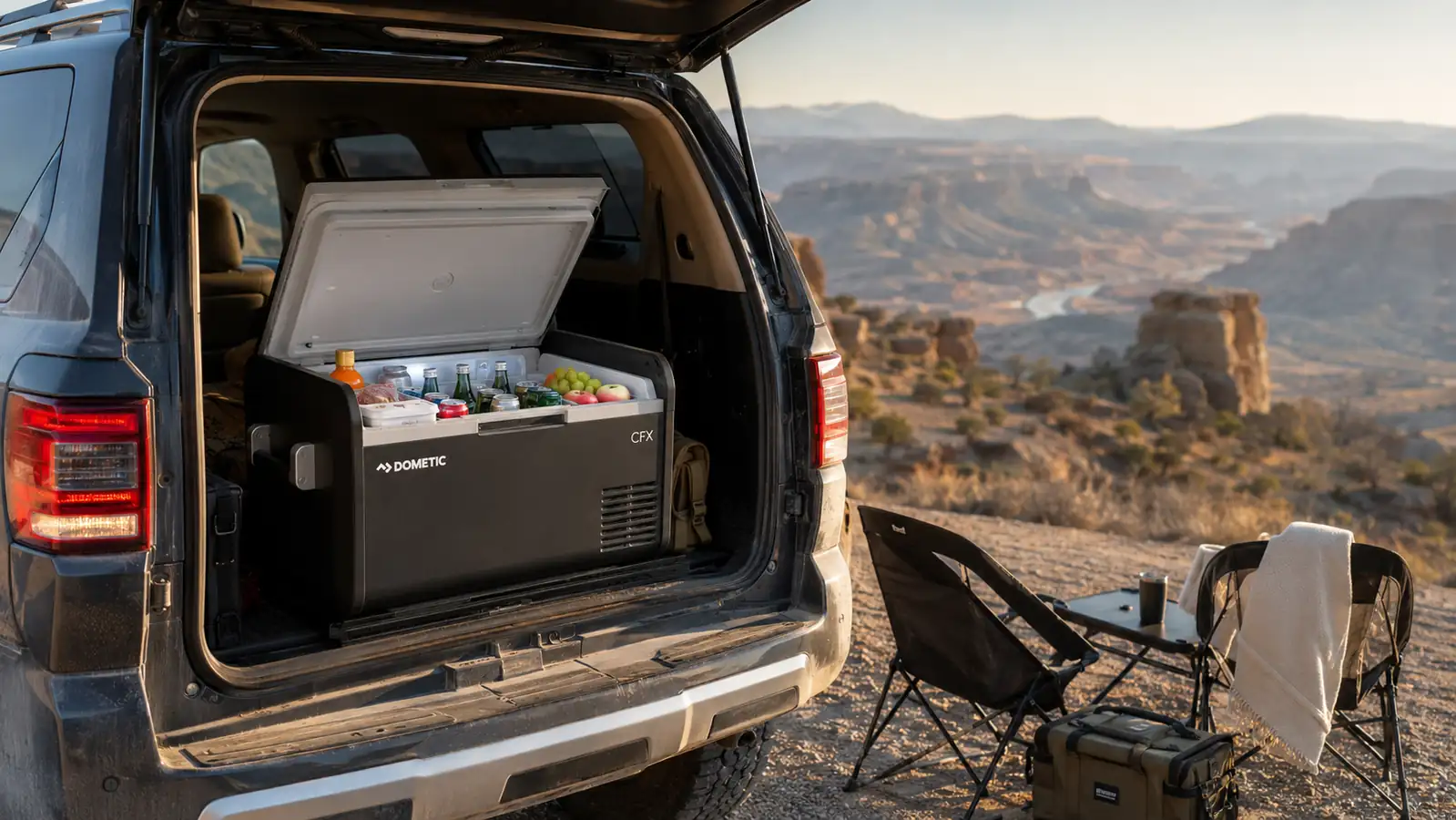
Rennie and I have driven out of Boise more times than I can count, usually in stretches of four or five days at a time in our 2018 4Runner, aiming for state parks, coastal pull-offs, or whatever forest service road looked interesting on the map. For the first few years of doing this, we ran a good wheeled cooler, thick-walled, the kind that actually holds ice for a while. Even so, we spent half of every trip doing ice math. How many days will this bag last. Is the gas station up ahead going to have any left. Is the bottom of the cooler now a shallow, cold lake that our cheese is floating in.
The BougeRV 23-quart fridge has ridden in the back of the 4Runner for the better part of two years now, running off a 12V outlet on driving days and switched to wall power at night wherever we stop. It holds an exact temperature the way a cooler never could, and after watching it work through hundreds of miles across Idaho, Oregon, and Nevada, here are the ten reasons I would not go back to ice.
No More Ice Runs, No More Guessing
If you have ever cut a road trip morning short to find a gas station with ice still in stock, this is the piece of gear that ends that problem for good.
Amazon Check Today's Price on Amazon →You stop planning your day around ice
This is the one that changes the trip the most. A cooler forces you to think about ice the same way you think about gas, always watching the level and calculating how far you can push it. The BougeRV runs from -8F up to 50F on its own compressor, no ice at all, so the only thing you're planning around is where you want to be for lunch. Two years in, I genuinely cannot remember the last time we bought a bag of ice.
It holds an actual, exact temperature
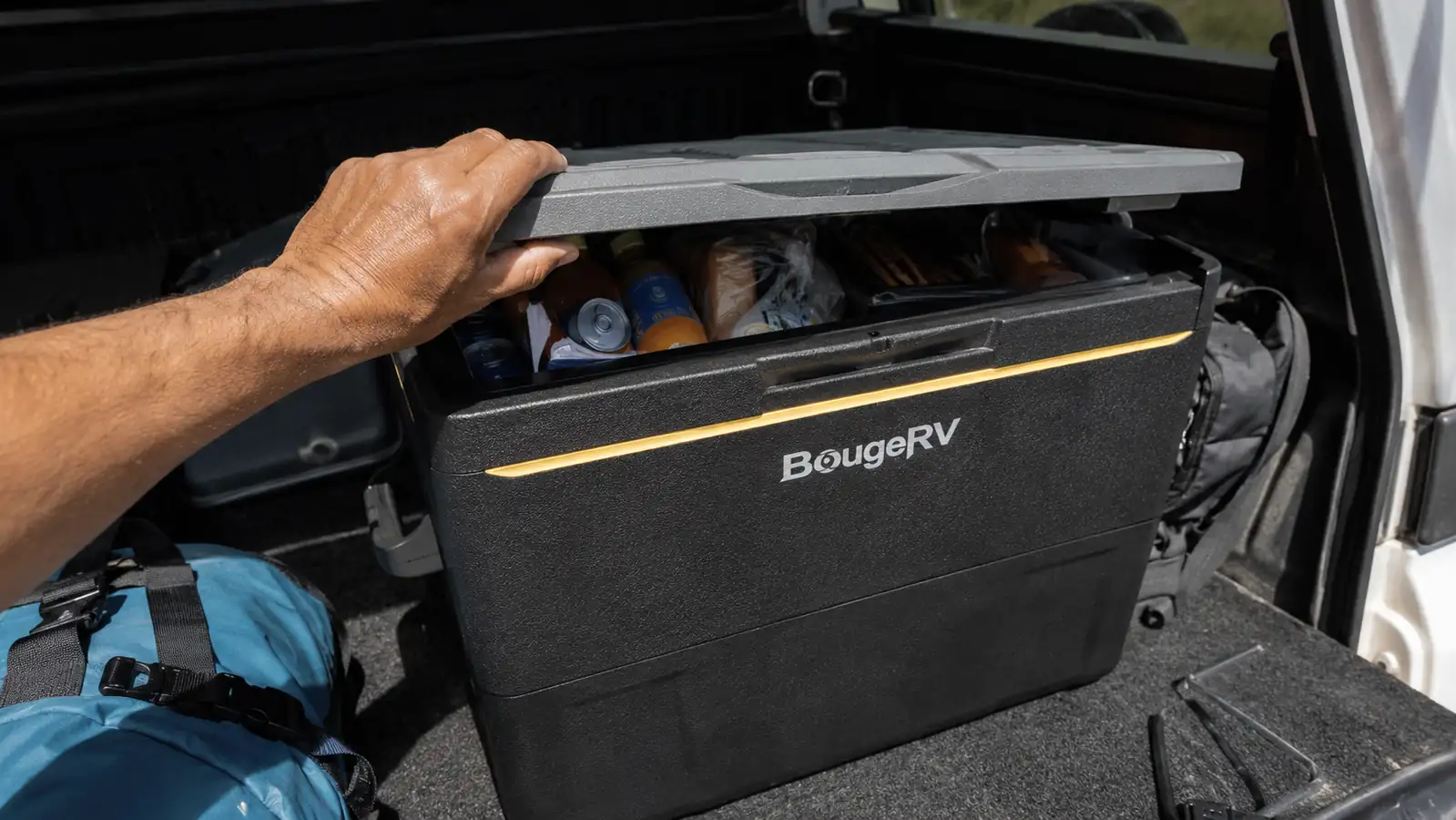
A cooler is a slow melt from the moment you close the lid. This fridge has a digital thermostat you set to a specific number, we run ours at 34F for drinks and dairy, colder if we're carrying raw meat for the back half of a trip. It holds that number for as long as it's powered, instead of drifting warmer every hour like ice does. That consistency is the real upgrade, more than the novelty of not buying ice.
It goes from warm to cold in about fifteen minutes
BougeRV rates the compressor to pull down to 32F in roughly fifteen minutes, and in our experience that number holds up loading room-temperature groceries straight from a store in Twin Falls or Elko. That matters on day one of a trip, when you're stocking up before you're anywhere near a real kitchen again. A cooler needs a full bag of ice and an hour of patience to do the same job, if it ever really gets there.
It runs on the truck's battery without draining it flat
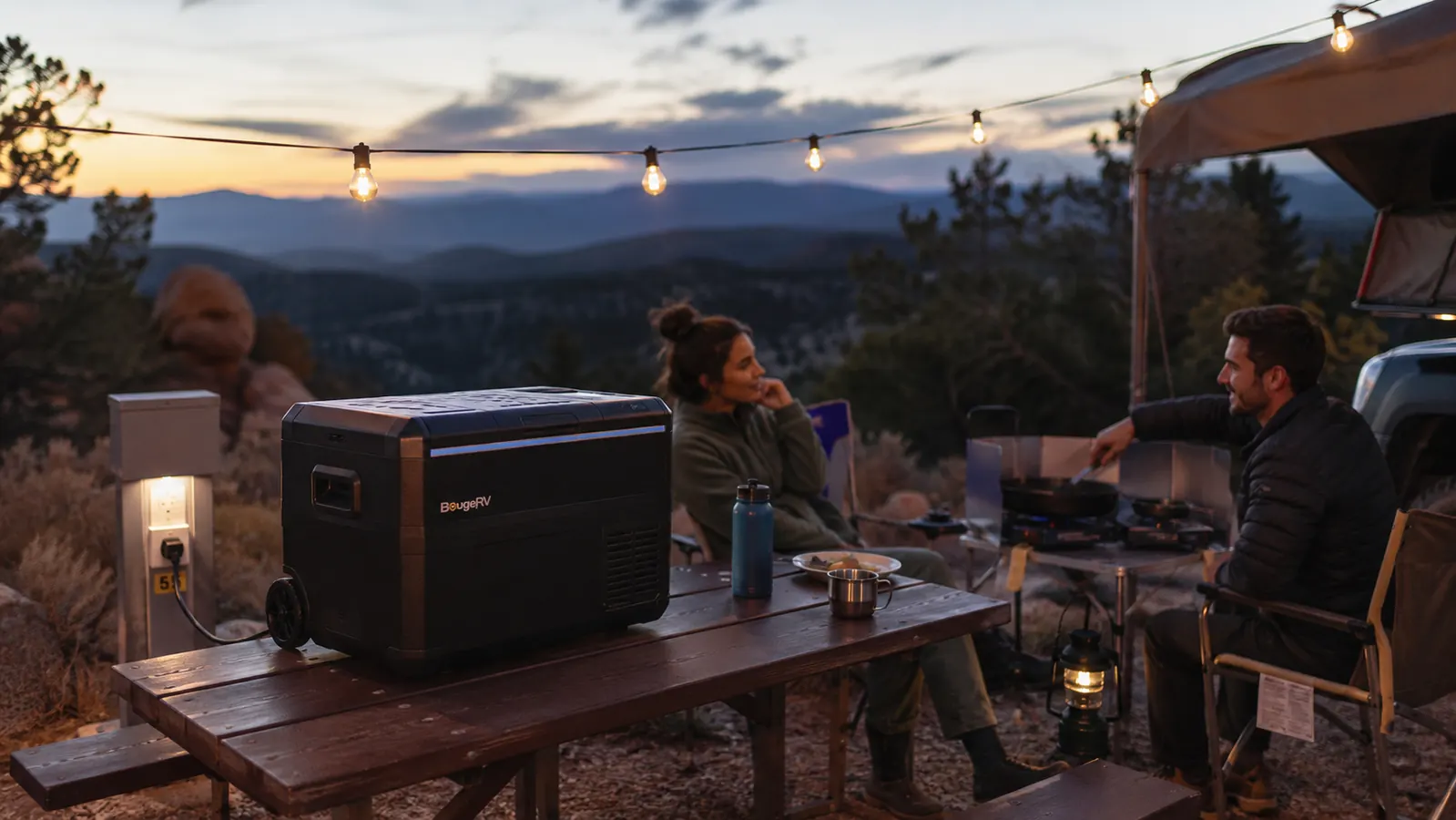
The unit runs on 12V or 24V DC as well as 110V AC, and it draws little enough power that we've never had trouble running it off the 4Runner's battery on driving days. It has its own low-voltage cutoff built in, so it protects the truck's battery rather than us having to guess when to unplug it. Overnight we switch it to a wall outlet at a campground or motel and let the truck battery rest.
There's no meltwater ruining your food or your trunk carpet
Anyone who has run a cooler for a week knows the low point, pulling out a soggy loaf of bread or a bag of chips that soaked through from the bottom. A compressor fridge produces no meltwater at all. Everything stays dry, labels stay readable, and the cargo area of the truck doesn't end up smelling like wet cardboard by day three. I didn't expect this to matter as much as it does until I stopped dealing with it.
It doubles as a real freezer when you need one
Because the range runs down to -8F, we use it as a straight freezer for the first half of longer trips, packing meat solid so it lasts, then dialing it back up toward fridge temperatures as we work through it. That's a flexibility a cooler simply doesn't have. If you want a deeper dive into how we sequence food across a full week on the road, our <a href="/how-to-keep-food-cold-on-long-road-trips">guide to keeping food cold on long trips</a> walks through the exact order we pack it in.
It takes up less usable cargo space than the cooler it replaced
A big wheeled cooler eats space in an odd, bulky shape that never quite fits flush against anything else. The BougeRV's box shape tucks flat against the side of the cargo area behind the rear seats, and because it doesn't need room for a bag of ice on top, the usable interior space is bigger relative to its footprint. On a trip where Rennie and I are already packing camp chairs, a stove, and clothes for a week, that difference adds up.
It's still working the same after two years of near-daily use
This is the one I trust most, because it's not a claim, it's what actually happened. The fridge has been opened and closed thousands of times over roughly two years of regular road trips and it still cools to the same set temperature it did on day one. We wrote up the full long-term breakdown, including the one thing that has worn out, in our <a href="/bougerv-fridge-review-long-term">6-month and now 2-year review</a>, if you want the unfiltered version.
It costs less over a season than you'd think
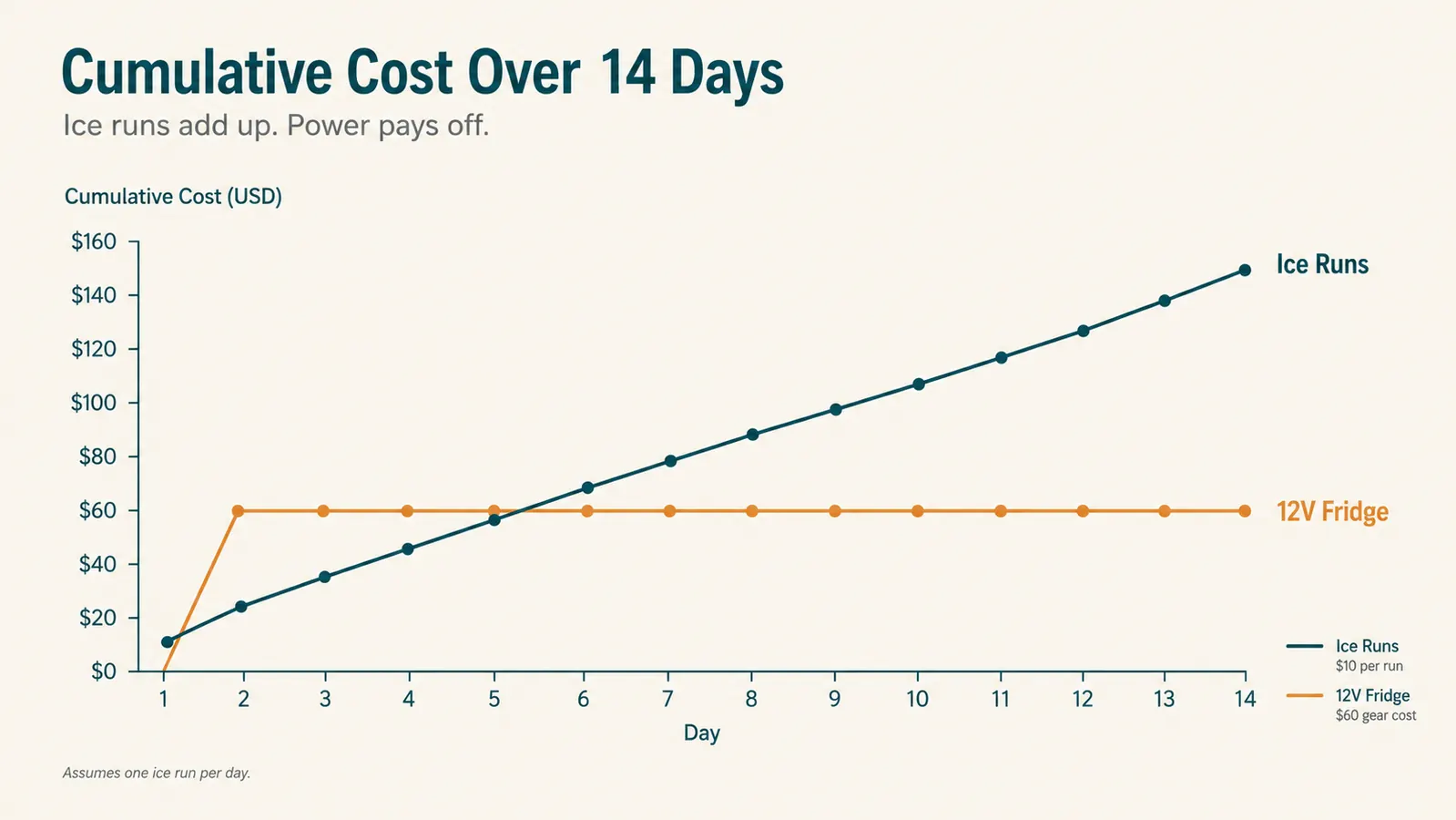
A bag of ice at a gas station along the interstate runs a few dollars, and on a multi-day trip you're buying one most mornings, sometimes twice a day in summer heat. Run that math across a full season of road trips and the ongoing cost of ice adds up fast, while the fridge is a single purchase that just keeps running. It's not free, but it stops being a recurring expense the way ice always is.
It changes what you're willing to cook on the road
Once cold storage stopped being a limiting factor, our meals on the road got better. We bring real groceries now, eggs, milk, cuts of meat for camp dinners, leftovers from the night before, instead of living on gas station snacks and whatever survives a cooler. That's a small thing on paper but it's the difference between a road trip that wears you down and one that actually feels good by day five.
What I'd Skip
It's not perfect. The compressor has an audible hum when it cycles, quiet compared to a generator but noticeable in a silent campsite at 2 a.m. It's heavier than an empty cooler once you factor in the housing and compressor, so lifting it in and out of the truck fully loaded is a two-hand job. It also doesn't come with an insulated travel cover, which we bought separately to keep it running efficiently in direct summer sun. And if your idea of a road trip is one weekend a year with a cooler full of soda, the upfront cost of a compressor fridge probably isn't worth it for you. This is gear for people putting real miles on it.
A fridge does not care how long the drive is. It sits at the temperature you set until you unplug it, and that is the entire pitch.
See Why This Fridge Ended Our Ice Runs for Good
Two years, hundreds of highway miles, and we still haven't gone back to a cooler. Check today's price and specs before your next trip.
Amazon Check Today's Price on Amazon →