
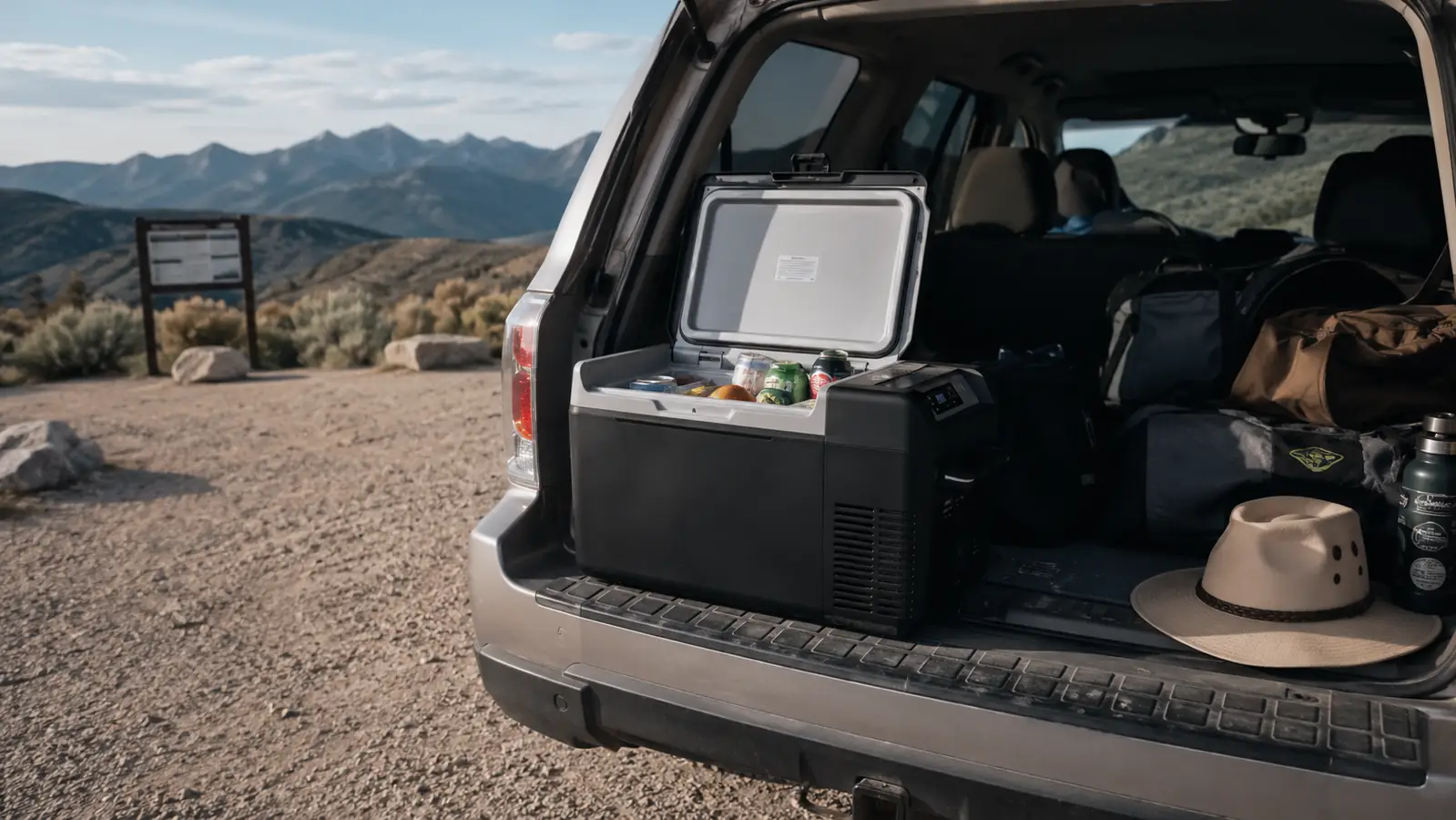
I have made the drive from Boise to the Sawtooths often enough that I know exactly how long a bag of gas station ice lasts in the back of my 4Runner in July. About a day and a half. After that it is slush, then it is a cooler full of lukewarm water with your cheese floating in it. Last spring I swapped my 60-quart rotomolded cooler for a 23-quart BougeRV 12V compressor fridge on a 5-day loop through Oregon, and I kept the old cooler in the garage the whole time so my wife Rennie and I could run the comparison honestly instead of arguing about it from memory over dinner.
This is not a lab test with a chamber full of instruments. It is one guy, one truck, and two different ways of keeping food cold over 5 days and about 900 miles of two-lane highway, gravel forest roads, and one long stretch of interstate with the AC cranked. If you are trying to decide between a 12V fridge and the cooler you already own and have used for years, here is what actually separates them once a trip gets past day two, which is where most cooler comparisons online seem to stop looking.
| BougeRV 12V Fridge | Rotomolded Cooler | |
|---|---|---|
| Capacity | 23 quarts, about 25 cans plus food, all usable | 60 quarts, more raw space but ice eats a third of it |
| Cooling method | Compressor, holds 32F to 40F regardless of outside temp | Melting ice, temperature drifts as ice disappears |
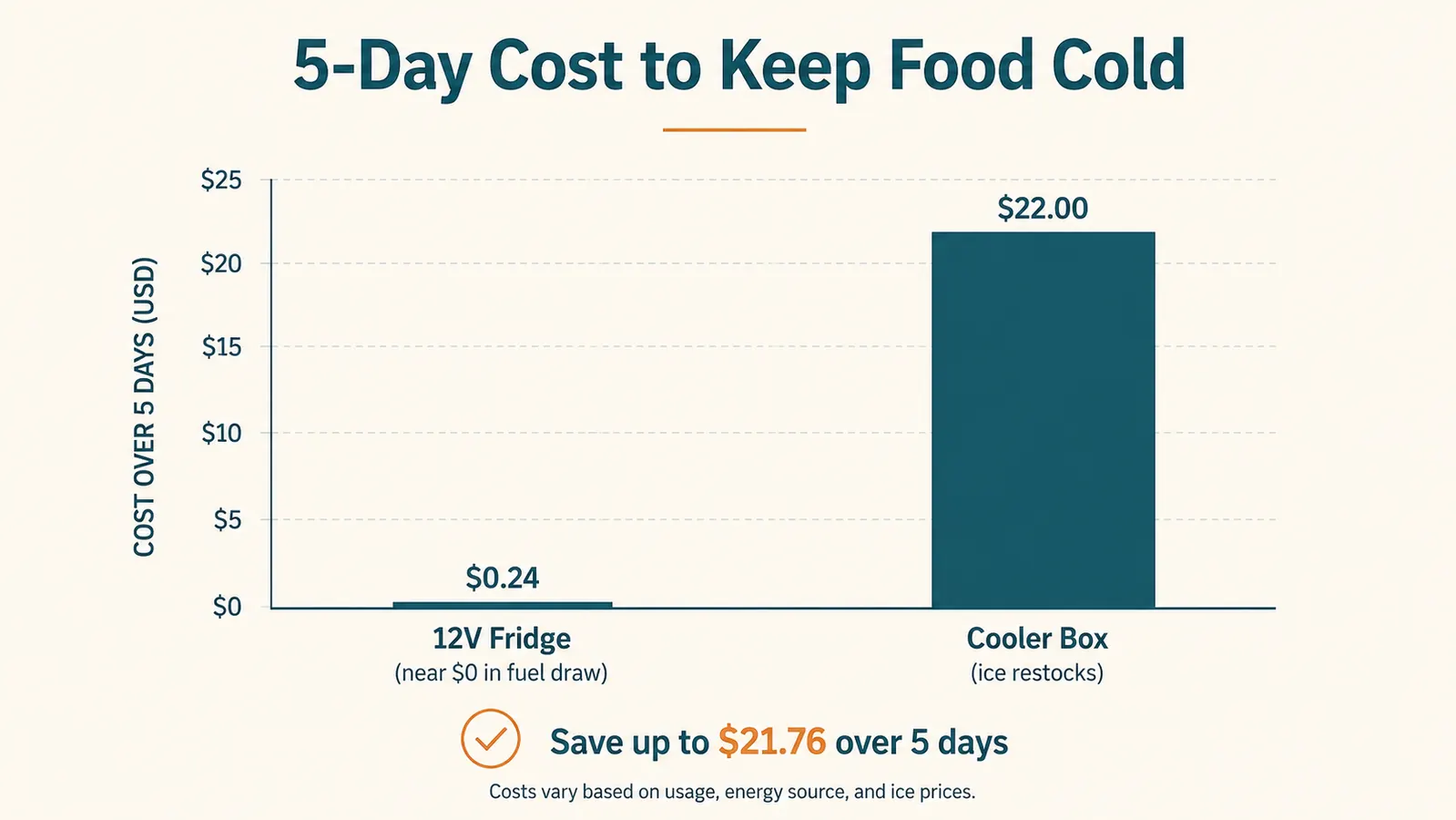
| Ice needed | None, ever | 10 to 20 lbs per day in 90F heat |
| Day-5 food state | Milk and eggs still good, thermometer read 36F | Would have needed 2 ice restocks, standing water by day 3 |
| Weight empty | About 30 lbs | About 32 lbs, plus 15 to 25 lbs of ice once loaded |
| Power source | 12V DC from the truck or 110V AC at a site | None needed |
| Noise | Audible compressor hum when running | Silent |
| Upfront cost | Mid-range for a compressor fridge, a real purchase | One-time cost, cheaper up front |
| Ongoing cost | Small draw on the truck battery, no recurring buy | Ice runs add up fast over a multi-day trip |
Where the BougeRV Fridge Wins
The single biggest difference is that the BougeRV holds a set temperature instead of slowly losing ground to the outside air. I set it to 37F before we left Boise and it sat within a couple of degrees of that number the entire trip, checked against a separate thermometer I kept clipped to the shelf inside so I was not just trusting the built-in display. The cooler, by contrast, starts strong on day one and then spends every day after that getting warmer as the ice gives up its cold to the outside air. By day 3 in the rotomolded cooler, my old digital probe was reading 46F to 48F, which is squarely in the range where dairy and deli meat start to worry me, and it only gets worse from there without a fresh bag of ice.
The second win is that nothing gets wet. I have lost more block cheese and lunch meat to cooler water than I want to admit over the years, and the BougeRV's dry compressor cooling means my eggs stay in their carton and my bread stays out of a puddle at the bottom of the box. It also means I am not draining a bag of gray ice water onto a gas station parking lot every morning, which sounds like a small thing until you have done it for the fifth trip in a row and started to resent the ritual. There is a real difference between packing a cooler thinking about how the ice will behave and packing a fridge just thinking about what you actually want to eat.
Third, once you are more than 3 days from a store, the fridge wins on math, not just on comfort. My cooler needed ice about every day and a half in summer heat, which on a 5-day trip means at least 2 stops just for a bag of ice, plus whatever detour off the route that costs in time and gas. The fridge ran the whole 5 days off the truck's second battery setup and a top-off at a campground outlet one night, no ice purchased at all, and no detour built around finding a gas station with a working ice machine at 9pm on a Sunday when half of them are already sold out.
There is also a packing win that does not show up until you actually load the truck. Because the fridge does not need room for ice, the usable interior matches the listed capacity. My 60-quart cooler, once you subtract the volume ice takes up, was realistically storing about the same amount of food as the 23-quart BougeRV holds empty of ice. That single fact reshaped how I think about capacity claims on any cooler box from now on, and it is the sort of thing you only notice once you have run both side by side instead of trusting the label on the box.
Tired of babysitting ice on every trip? See today's price on the BougeRV 12V fridge.
It ran a full 5-day loop through Oregon without a single bag of ice, holding 36F to 38F the entire time.
Amazon Check Today's Price on Amazon →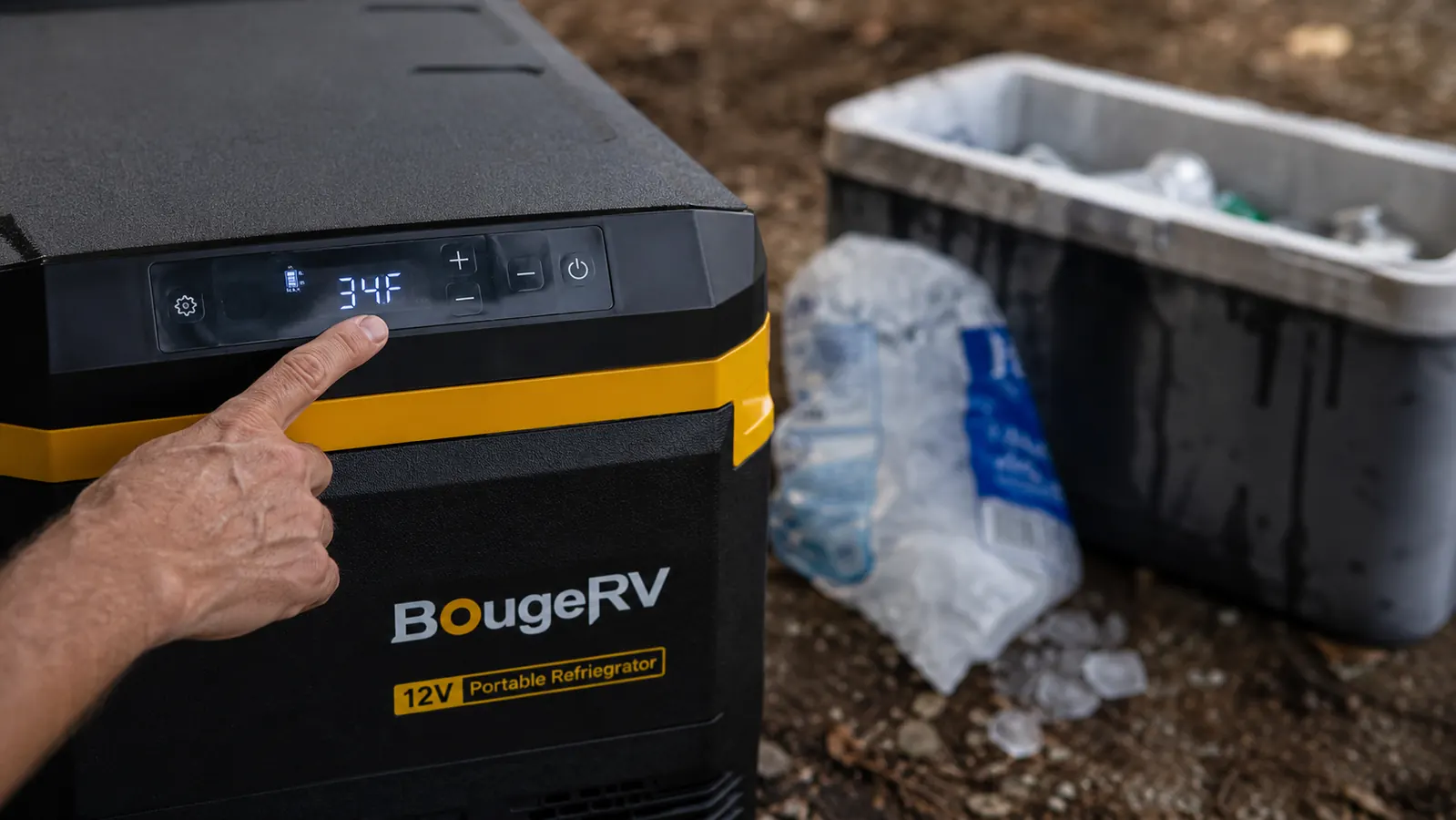
Where the Cooler Box Wins
I am not going to pretend the cooler has no advantages, because it does, and some of them matter more than the spec sheet suggests. The rotomolded cooler needs nothing but ice. No battery, no wiring, no worrying about what happens if you park the truck for 3 days at a trailhead and the compressor keeps drawing down your battery while you are out of cell range. If you are camping somewhere with zero access to a vehicle or an outlet for the whole stay, a cooler is simply less to manage, and it will not fail electronically on you in the middle of a trip when you are furthest from a fix.
The cooler is also cheaper to buy up front, and it is a one-time purchase with no moving parts to eventually wear out or need servicing. My old rotomolded cooler is 8 years old and has never needed a repair of any kind, not a hinge, not a latch, nothing. If your trips are short, 2 days or less, and you are never more than an hour from a gas station selling ice, the gap between the two options closes fast, and the cooler's plain simplicity starts to matter more than the fridge's steadier temperature.
There is also the resale and lending factor, which I did not expect to care about but do. I can hand my cooler to a neighbor for a weekend and never think about it again. Handing off a 12V fridge means also handing off a battery isolator setup, an inverter question, and an explanation of how not to drain someone's car battery, which is a lot more to transfer than a cooler and a bag of ice. It is a small thing until you are the one standing in someone's driveway trying to explain a wiring harness.
The cooler asks nothing of you but ice. The fridge asks for a battery setup you trust, and then it stops asking you for anything at all.
The Tradeoffs Nobody Puts on the Spec Sheet
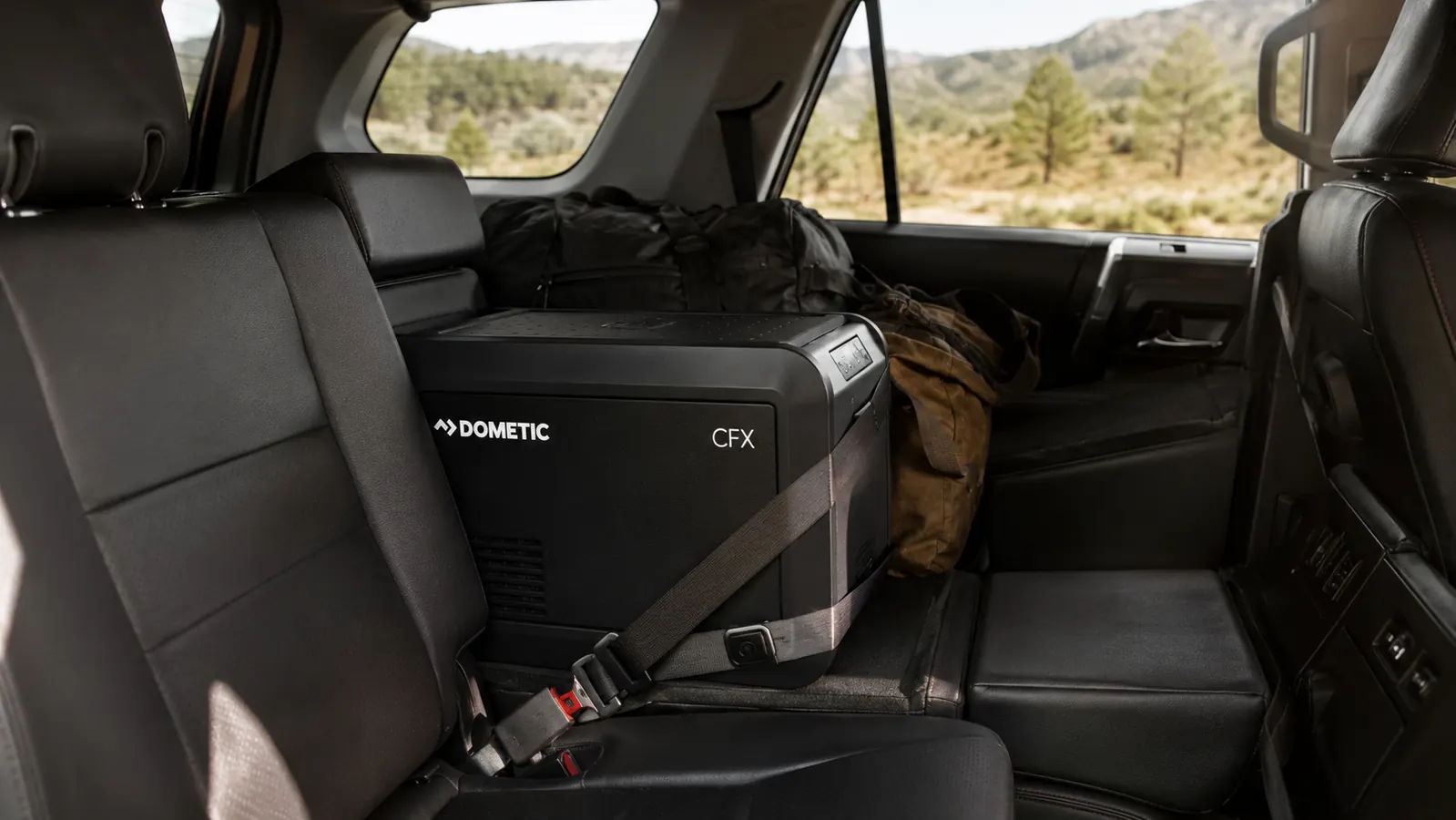
The BougeRV does hum. It is not loud, more like a mini-fridge in a hotel room, but if you are sleeping in the back of the 4Runner with the fridge 3 feet from your head, you will hear the compressor cycle on and off through the night. Rennie noticed it before I did, on the second night outside Bend, and it took us a couple of trips to stop registering it as an intrusion instead of background noise. It also needs a real power plan behind it. I run mine off a dedicated battery isolator so it never touches my starting battery, and I would not recommend running a compressor fridge straight off your main battery for multi-day trips without one, unless you like the idea of a dead truck at a trailhead 40 miles from the nearest tow.
The cooler's tradeoff is less dramatic but constant, and it never goes away no matter how many trips you take. Every single trip, you are managing ice logistics: how much to buy, where the next gas station is, how much room the ice itself is eating out of your usable capacity, and whether the melt is going to soak through the cardboard box of crackers you forgot to bag. It is a small tax paid daily instead of a bigger cost paid once at purchase, and over a season of trips that daily tax adds up in both dollars and hassle in ways that are easy to underestimate until you actually add up the receipts.
What It Actually Costs Over a Season
Running the numbers from my own trips this year, I bought ice roughly 14 times across 6 separate outings before I switched, averaging 2 bags a trip. That is a real, recurring cost that never stops as long as you own the cooler. The BougeRV's cost is front-loaded into the purchase and the battery setup, and after that the ongoing expense is just a sliver of fuel to keep the truck's battery topped off, which I was already burning regardless. Over a full season of road trips, the fridge's total cost of ownership starts to close the gap with the cooler, and on trips longer than 4 days it usually comes out ahead once you count the ice you are not buying. Add in the food you are not throwing out because it warmed up on day 4, and the math tilts even further toward the fridge.
Who Should Buy the BougeRV Fridge
If you take multi-day trips, especially anything past 3 days, or if you fly somewhere and rent a vehicle for a week of driving, the fridge earns its keep fast. Anyone hauling dairy, meat, or medication that needs a genuinely stable temperature should stop trusting ice to hold a line it cannot hold once day 2 arrives. It is also the better call if you are tired of the ice-run detour eating into actual trip time, or if you have simply made this drive enough times to know exactly how it ends with a standard cooler. For the full picture on how it held up over 6 months of use, including battery drain and how it handled a stretch of 100-degree desert, I wrote up the details in my long-term BougeRV fridge review.
Who Should Stick With a Cooler
If your trips rarely stretch past a weekend, if you camp somewhere with easy access to ice, or if you are not ready to add a battery setup to your vehicle, a good cooler is still a reasonable choice and I would not talk you out of it. There is also an honest case for owning both: a cooler for short local trips, tailgates, and drinks on ice, the fridge for anything that goes past 3 days on the road. I get into the quirks I did not expect going in, including the noise level and the actual battery math on a long haul, in my honest BougeRV fridge review.
If your last trip ended in a cooler full of gray water, this is the fix.
See current availability and pricing for the BougeRV 23-quart 12V fridge before your next trip.
Amazon Check Today's Price on Amazon →